
Current location: ENGLISh > NEWS > Company News >
Maintenance cycle and replacement specifications for mechanical seals and packin
time:2026-04-03 01:48:29 author:特种泵阀 click:179
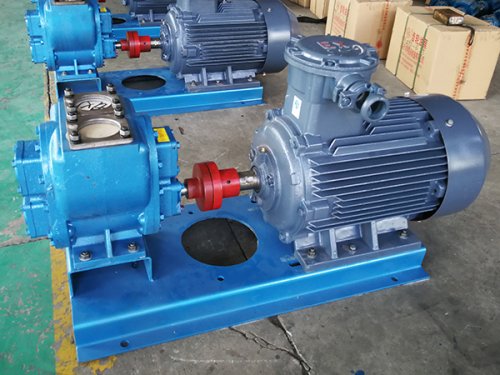
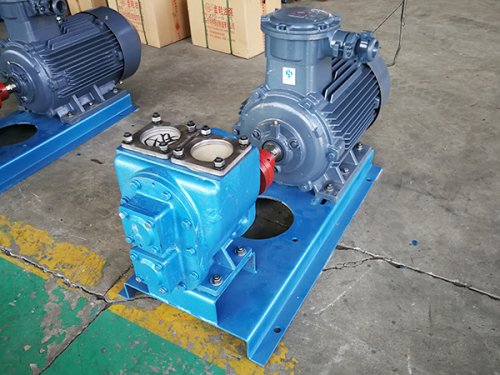
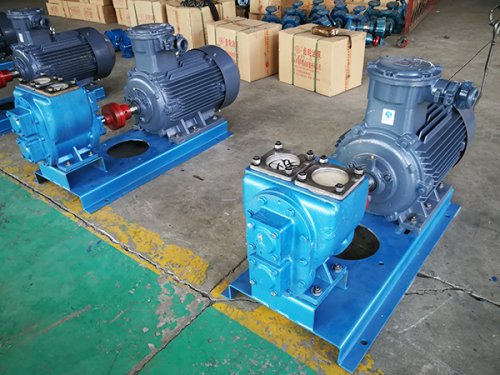
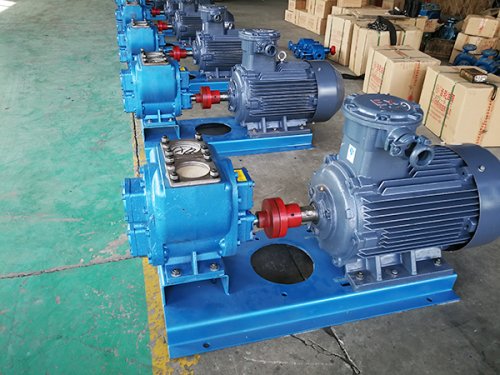
As a key equipment in the fluid transportation area, the sealing system of LC piston rotor pump directly determines the operating speed and production stability of the equipment. Mechanical seals and packing seals, as two mainstream sealing forms, need to follow differentiated maintenance cycles and replacement specifications to ensure stable sealing performance and extend equipment service life.
1、 Maintenance cycle and replacement specifications for mechanical seals
Mechanical seals, with their characteristics of small leakage and good service life, are widely used in working conditions that require good sealing accuracy. Their maintenance and replacement must strictly follow periodic and standardized processes.
Maintenance cycle setting: According to the differences in equipment operating conditions, the maintenance cycle of mechanical seals is divided into three levels: daily inspection, monthly maintenance, and quarterly inspection. Daily inspections need to be conducted daily, mainly to check the leakage of sealing parts, the supply status of coolant and flushing liquid; Monthly maintenance should be carried out after about 300 hours of equipment operation, detecting the pressure in the sealed chamber and the temperature of the coolant. The coolant pressure should be 0.05-0.1MPa higher than the medium pressure, and the temperature should be controlled within the range of 20-40 ℃; Quarterly maintenance should be carried out after about 1000 hours of equipment operation, dismantling the sealing components to check the wear of the friction pair, spring elasticity, and aging degree of the O-ring. For the working conditions of transporting corrosive or high-temperature media, the maintenance cycle needs to be shortened by 30%, and the daily inspection frequency needs to be increased to twice a day.
Replacement criteria: When the following situations occur, the mechanical seal components need to be replaced in a timely manner: first, the seal leakage exceeds 2 drops per minute and cannot be improved by adjusting the flushing liquid pressure; Secondly, scratches, cracks, or wear exceeding 0.1mm appear on the surface of the friction pair; thirdly, the spring undergoes deformation, fracture, or a decrease in elasticity of more than 20%; The fourth issue is the aging, cracking, or loss of elasticity of the O-ring. During the replacement process, components that match the original sealing model should be selected, and SiC/SiC material should be chosen for the friction pair to improve wear and corrosion resistance; During installation, it is necessary to ensure that the coaxiality error of the sealing components does not exceed 0.02mm to avoid seal failure caused by eccentric wear.
Maintenance operation points: During daily inspections, it is necessary to ensure that there is no interruption in the coolant and flushing liquid. Before starting up, the coolant system should be turned on 10 minutes in advance, and after stopping, it should be turned off 10 minutes later to prevent seal damage due to dry friction; During monthly maintenance, it is necessary to clean the coolant filter with a filtration accuracy of no less than 200 mesh to prevent impurities from entering the sealed chamber; During quarterly maintenance, it is necessary to clean the sealing chamber and use neutral cleaning agents to wipe the surface of the friction pair. It is strictly prohibited to use hard tools for scraping.
2、 Maintenance cycle and replacement specifications for packing seals
The packing seal, with its simple structure and reasonable maintenance cost, is suitable for working conditions with relatively loose leakage requirements. Its maintenance and replacement should focus on the combination of daily adjustment and regular replacement.
Maintenance cycle setting: The maintenance cycle of the packing seal is divided into three levels: daily inspection, weekly adjustment, and monthly maintenance. Daily inspections should check the leakage of the packing seal and ensure that the leakage rate is controlled at 5-10 drops per minute; Weekly adjustment should be carried out after the equipment has been running for about 80 hours, and the tightness of the packing gland should be adjusted according to changes in leakage; Monthly maintenance should be carried out after about 300 hours of equipment operation, checking the wear of the packing and the degree of wear of the shaft sleeve. For the working conditions of conveying media containing impurities, the maintenance cycle needs to be shortened by 50%, and the weekly adjustment frequency needs to be increased to once every 3 days.
Replacement criteria: When the following situations occur, the packing sealing components need to be replaced in a timely manner: first, the leakage exceeds 10 drops per minute and cannot be improved by adjusting the packing gland; Secondly, the hardening, cracking, or wear of the filler exceeds one-third of its height; Thirdly, the wear of the shaft sleeve exceeds 0.2mm, or there are scratches or grooves on the surface. During the replacement process, it is necessary to use packing materials that match the material and medium characteristics of the pump body. For example, graphite packing should be used for transporting high-temperature media, and PTFE packing should be used for transporting corrosive media; When installing the packing, the "staggered cutting method" should be used, and the cutting angle between adjacent packing should be maintained at 90-120 °. The clamping force of each circle of packing should be uniform to avoid leakage caused by bias.
Key points of maintenance operation: During daily inspections, attention should be paid to the lubrication status of the packing. Minor leaks are necessary to lubricate the packing and shaft sleeve. It is strictly prohibited to excessively press the packing cover, which may worsen the wear of the shaft sleeve; During weekly adjustment, the diagonal step-by-step tightening method should be used, with each tightening not exceeding 1/4 turn to avoid an increase in motor current due to excessive clamping force; During monthly maintenance, it is necessary to check the wear of the shaft sleeve. If the wear exceeds the standard, the shaft sleeve should be replaced in a timely manner, and the surface of the shaft sleeve should be polished to a roughness not exceeding Ra0.8 μ m.
3、 General maintenance and replacement principles
Both mechanical seals and packing seals must follow the following general principles: firstly, establish equipment operation records, record the time, content, and equipment parameter changes of each maintenance and replacement, and optimize the maintenance cycle through data analysis; Secondly, select the appropriate sealing form based on the characteristics of the medium and working conditions to avoid sealing failure caused by improper sealing selection; Thirdly, during equipment shutdown and maintenance, it is necessary to clean the inside of the pump body to prevent impurities from accumulating and affecting the sealing performance; Fourthly, for equipment operating in winter, it is necessary to drain the medium in the pump body and sealing chamber after shutdown to prevent freezing and cracking of the sealing components.
The above text focuses on the mechanical seal and packing seal of LC piston rotor pump, clarifying the maintenance cycle, replacement judgment standards, and operating points respectively. At the same time, general maintenance principles are formulated, which can provide complete guidance for the maintenance of equipment sealing systems. If you need to adjust the maintenance cycle according to the working conditions, please let us know at any time.