
Current location: ENGLISh > NEWS > Company News >
Principle of matching speed, pressure and system of insulation asphalt pump
time:2026-01-09 11:57:41 author:特种泵阀 click:167
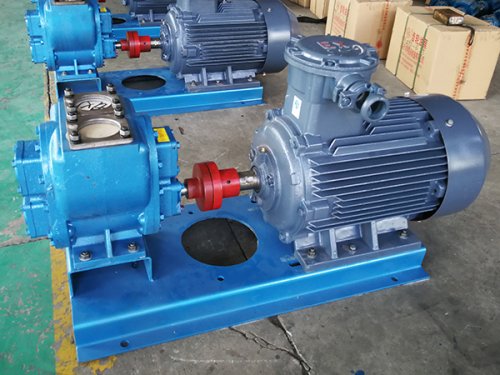
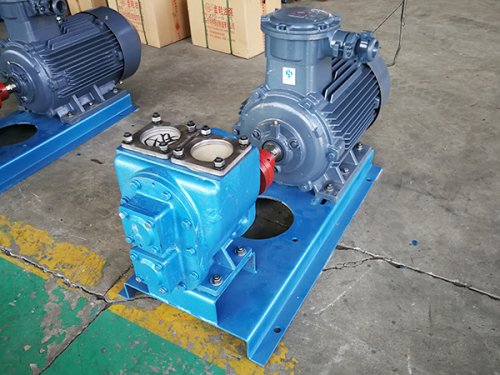
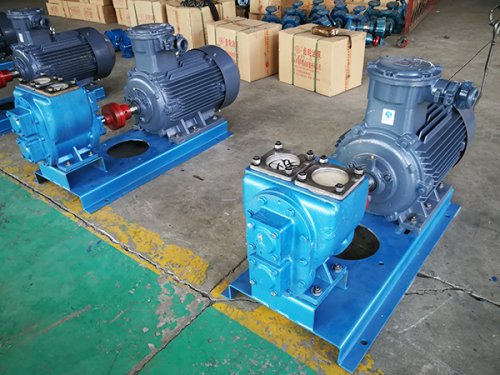
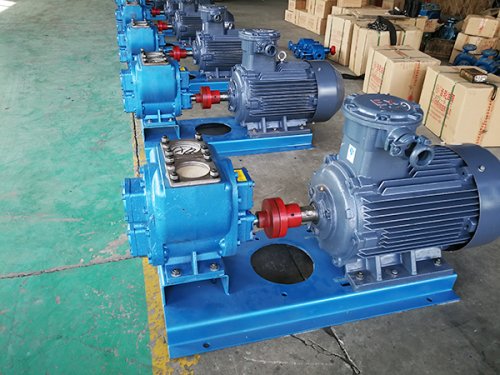
As the core equipment for transporting high-temperature asphalt, the compatibility between the speed, pressure parameters, and system requirements of the insulated asphalt pump directly affects the conveying rate, equipment life, and operational stability. Due to the high viscosity and strong temperature sensitivity of asphalt, its flow state changes significantly with temperature. Therefore, the matching principle needs to be comprehensively considered from three aspects: the mechanical characteristics of the pump, the rheological law of asphalt, and the system operating conditions. The equipment operates at a good speed under stable operating conditions.
1、 Speed matching principle: Balancing speed and shear control
The speed selection of the insulated asphalt pump needs to balance the conveying rate and the risk of asphalt shear degradation. Although asphalt exhibits Newtonian fluid characteristics at high temperatures, excessive shear rates can damage its colloidal structure, leading to a decrease in softening point and an increase in penetration, which affects construction quality. Therefore, speed matching needs to follow the following logic:
1. Basic speed range limitation
The rated speed of the pump should be determined based on the viscosity of asphalt at the conveying temperature. Low temperature asphalt (such as modified asphalt) has good viscosity and requires a lower rotational speed to reduce shear stress; High temperature asphalt (such as base asphalt) has low viscosity, and the rotational speed can be appropriately increased, but it is necessary to avoid exceeding the critical shear rate allowed by the asphalt. For example, when transporting modified asphalt, the linear speed of the pump should be controlled within a certain range to prevent polymer molecular chain breakage.
2. Dynamic speed regulation mechanism
The system should be equipped with a variable frequency speed regulation device to adjust the speed in real time according to actual needs. In the start-up phase, the asphalt temperature is low and the viscosity is high, so it needs to run at low speed. After the asphalt temperature reaches the target value, gradually increase the speed; During the transportation process, if temperature fluctuations or viscosity changes of asphalt are detected, the flow demand should be compensated by adjusting the speed to avoid abnormal pressure in the pump chamber caused by fixed speed.
3. Coordination between speed and pump type
The adaptability of insulation asphalt pumps with different structures (such as gear pumps and screw pumps) to rotational speed varies. Gear pumps are prone to leakage during operation due to inherent clearance in gear meshing, and therefore require a lower rotational speed; The screw pump forms a sealed chamber through the rotation of the screw, which can withstand good rotational speed, but the gap between the screw and the pump body needs to be controlled to prevent asphalt carbonization caused by excessive rotational speed.
2、 Principle of Pressure Matching: Building a Pressure Buffer and Stability Mechanism
The pressure matching of the insulated asphalt pump should take into account system resistance, equipment pressure bearing capacity, and stable redundancy to avoid asphalt oxidation or pump body damage caused by pressure fluctuations.
1. Balance of pressure and system resistance
The inlet and outlet pressure of the pump should be slightly higher than the total system resistance, including pipeline friction resistance, valve local resistance, and static pressure caused by height differences. If the pressure is insufficient, the asphalt flows slowly and is prone to cooling and solidification inside the pipeline; If the pressure is too high, it will accelerate the aging of asphalt and even cause the pump body seal to fail. For example, during long-distance transportation, pressure monitoring points need to be set up along the way, and pressure can be adjusted through variable frequency speed regulation or bypass valves to ensure that the pressure in each section is within the correct range.
2. Configuration of pressure buffering device
Installing an accumulator or buffer tank on the inlet and outlet pipelines of the pump can absorb pressure pulses and reduce the impact of pressure fluctuations on the rheological properties of asphalt. The accumulator stores energy by compressing gas, absorbs excess pressure when the system pressure increases, and releases energy when the pressure decreases to maintain pressure stability. In addition, using a soft start pump or frequency converter for starting can avoid the instantaneous high voltage impact caused by direct motor start-up.
3. Stable pressure protection
The pump body needs to be equipped with overpressure protection devices, such as control valves or rupture discs. When the system pressure exceeds the set value, the control valve automatically opens to release pressure, preventing the pump body from deforming due to overpressure; Explosive discs are used for quick pressure relief under end conditions to prevent equipment explosion caused by pressure accumulation. At the same time, flexible connections should be used for the inlet and outlet pipelines of the pump to reduce pipeline vibration caused by pressure fluctuations.
3、 System collaborative matching principle: Multi dimensional parameter linkage optimization
The speed and pressure matching of the insulated asphalt pump need to form a closed-loop control with other parameters of the system (such as temperature, flow rate, viscosity) to achieve overall speed maximization.
1. Temperature speed pressure linkage control
The temperature of asphalt is the core factor affecting viscosity, which directly determines the pump speed and pressure requirements. The system should integrate temperature sensors to monitor the temperature of asphalt in real time, and adjust the heating device, speed, and pressure through the linkage of the controller. For example, when the temperature decreases, the heating power is automatically increased while the speed is reduced to reduce shear and prevent the pump chamber from being blocked due to a sharp increase in asphalt viscosity.
2. Dynamic response to traffic demand
According to the construction progress or production requirements, the system needs to have the ability to quickly adjust the flow rate. By adjusting the pump speed through a frequency converter, linear changes in flow can be achieved, avoiding throttling losses caused by conservative valve adjustments. For example, in asphalt paving operations, when the speed of the paver changes, the speed of the pump needs to be synchronously adjusted to match the asphalt supply with the paving amount, in order to prevent material breakage or overflow.
3. Maintenance cycle and working condition adaptation
The maintenance cycle of the insulated asphalt pump needs to be matched with the system operation mode. In continuous operation scenarios, the speed and pressure of the pump need to be controlled at a lower level to extend the life of the seals and bearings; In intermittent operation scenarios, it is necessary to preheat the asphalt to the target temperature before each start to avoid thermal stress concentration on the pump body caused by cold start. In addition, it is necessary to regularly detect the impurity content in asphalt to prevent particle wear on the pump body and affect pressure stability.
The speed and pressure matching of the insulated asphalt pump should be based on the rheological properties of asphalt, and a stable conveying system with good speed should be constructed through dynamic adjustment, pressure buffering, and system linkage. Proper matching can not only improve equipment lifespan, but also determine asphalt quality, providing support for road construction or industrial production.