
Current location: ENGLISh > NEWS > Company News >
Comparative analysis of FCB stainless steel pump and variable frequency speed re
time:2026-01-13 12:00:00 author:特种泵阀 click:147
In the industrial fluid transportation area, FCB stainless steel pumps and variable frequency speed regulation technology are two core solutions that affect system speed and stability from the perspectives of equipment characteristics and drive control. The former focuses on mechanical structure optimization, while the latter achieves dynamic regulation through power electronics technology. The two complement each other in application scenarios, energy efficiency performance, and maintenance requirements. The following comparative analysis is conducted from four dimensions: technical principles, performance characteristics, applicable scenarios, and maintenance management.
1、 Technical principle: Differentiation path between mechanical drive and power electronics
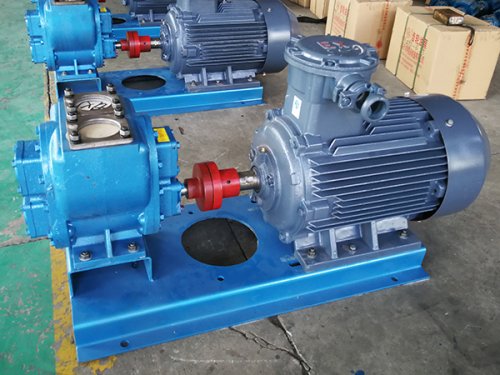
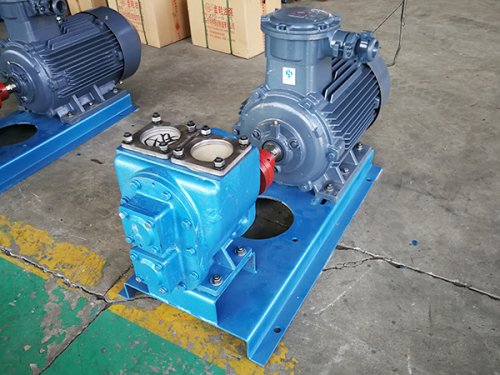
FCB stainless steel pump belongs to the positive displacement rotary pump, and its core working principle relies on a pair of precision meshing gears. When the motor drives the driving gear to rotate, the sealing chamber formed by the gear teeth and the pump body changes periodically, achieving the suction and discharge of liquid. This mechanical structure determines its flow and pressure characteristics: flow is only related to gear speed and slot volume, while pressure depends on system resistance. Due to the inherent clearance in gear meshing, FCB pumps need to optimize the tooth profile (such as involute helical gears) to reduce leakage when transporting high viscosity media, while using materials such as engineering ceramics to extend bearing life.
Variable frequency speed regulation technology uses power electronic devices such as IGBTs to construct AC-DC-AC conversion circuits, converting fixed frequency AC power into frequency adjustable AC power. The core control logic is based on the proportional relationship between motor speed and power frequency, and achieves linear adjustment of speed through real-time frequency adjustment. For example, in pump loads, the frequency converter can automatically reduce the motor speed based on the feedback signal of the pipeline pressure, avoiding throttling losses caused by conservative valve regulation. This technology requires vector control or direct torque control algorithms to compensate for torque fluctuations and system stability during low-speed operation.
2、 Performance characteristics: Balancing steady-state output and dynamic response
The obvious advantage of FCB stainless steel pump lies in its steady-state performance. Its flow output is almost unaffected by pressure fluctuations at the inlet and outlet, making it particularly suitable for scenarios that require constant flow, such as quantitative injection in chemical processes or pressure maintenance in hydraulic systems. In addition, this type of pump has a simple structure, few components, and a long maintenance cycle. For example, models using dual mechanical seal systems can achieve long-term leak free operation. However, its rigid speed characteristics result in limited energy regulation capability: when the system resistance changes, the pump can only adjust the flow through the bypass valve, causing significant throttling energy consumption.
Variable frequency speed regulation technology is known for its dynamic response capability. Through closed-loop control of pressure sensors and frequency converters, the system can match the load demand in real time. For example, in a heating cycle system, the frequency converter pump can automatically adjust the water supply according to changes in indoor temperature, avoiding energy waste. This technology can also significantly reduce the starting current of the motor and minimize the impact on the power grid. But the introduction of frequency converters also brings new challenges: harmonics generated by power electronic devices may interfere with other equipment, and filtering devices need to be configured; At the same time, the high-frequency switch action leads to a shortened insulation life of the motor, and a variable frequency motor needs to be selected.
3、 Applicable scenarios: Process requirements determine technology selection
Typical application scenarios of FCB stainless steel pumps include:
High viscosity medium transportation: such as asphalt, resin, etc., the gear structure can overcome the viscous resistance of the medium, and variable frequency pumps are prone to medium solidification due to low speed in such working conditions.
Self suction requirement: FCB pumps can achieve self suction by optimizing the impeller, suitable for scenarios such as well water extraction or container emptying, while variable frequency pumps require additional self suction devices.
Corrosive environment: FCB pumps with 316L stainless steel overcurrent components are not afraid of chemical media, and their sealing structure is easier to pass EHEDG certification than variable frequency pumps, meeting the hygiene standards of the food and manufacturing industries.
The advantages of variable frequency speed regulation technology are reflected in the following areas:
Scenarios with frequent flow fluctuations, such as urban water supply systems, can achieve energy savings by automatically adjusting the number and speed of pump units based on peak/off peak water usage through a frequency converter.
Precision control requirements: In laboratories or semiconductors, variable frequency pumps can be used in conjunction with PID controllers to achieve accurate flow regulation with a small error range.
Remote monitoring scenario: The variable frequency pump with integrated IoT interface can upload operating parameters in real time for predictive maintenance, while the FCB pump requires additional sensors and data acquisition modules.
4、 Maintenance Management: Differences between Preventive Maintenance and Condition based Maintenance
The maintenance of FCB stainless steel pumps mainly relies on regular inspections of mechanical components. For example, it is necessary to check the wear of the gear tooth surface after each operating cycle, and if there is pitting or peeling, it should be replaced in a timely manner; At the same time, it is necessary to calibrate the axial clearance to prevent gear eccentric wear caused by bearing wear. For models using engineering ceramic bearings, it is necessary to strictly control the assembly torque to avoid brittle material cracking.
The maintenance of the variable frequency speed regulation system needs to take into account both the electrical and mechanical parts. In terms of electrical aspects, it is necessary to regularly check the operating status of the frequency converter cooling fan, clean up accumulated dust to prevent overheating; At the same time, an oscilloscope is needed to monitor the output waveform and evaluate the aging degree of the IGBT module. The mechanical part needs to pay attention to the lubrication status of the motor bearings. Due to frequent speed fluctuations, the bearings of variable frequency motors need to use high-temperature lubricating grease. In addition, harmonic testing should be conducted quarterly to ensure that the total harmonic distortion meets the standards.
5、 Technological Fusion: The Evolutionary Trend from Opposition to Collaboration
With the advancement of Industry 4.0, the integration of FCB pumps and variable frequency technology has become a new direction. For example, some models have integrated variable frequency drive modules and achieved closed-loop control through built-in pressure sensors, which not only retains the mechanical sealing properties but also has dynamic adjustment capabilities. In the smart water project, the FCB pump group works in conjunction with the frequency converter: the fixed speed pump is responsible for the basic flow, and the frequency converter pump responds to fluctuating loads. This hybrid architecture of "fixed speed+frequency converter" can significantly reduce system energy consumption. In the future, with the maturity of magnetic levitation bearing technology, FCB pumps are expected to further break through speed limitations and form increasingly close technical coupling with variable frequency speed regulation.