
Current location: ENGLISh > NEWS > Company News >
What should I do if there is vibration in the asphalt gear pump?
time:2025-12-09 02:13:30 author:特种泵阀 click:220
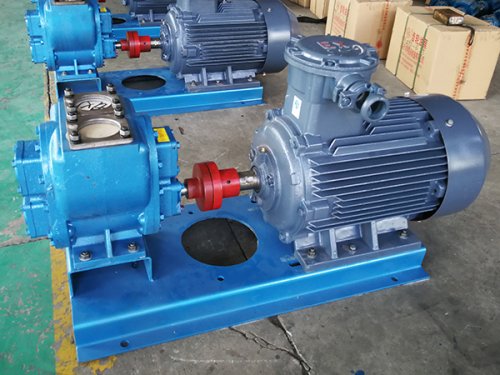
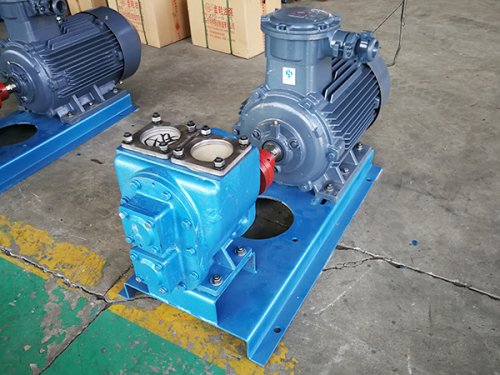
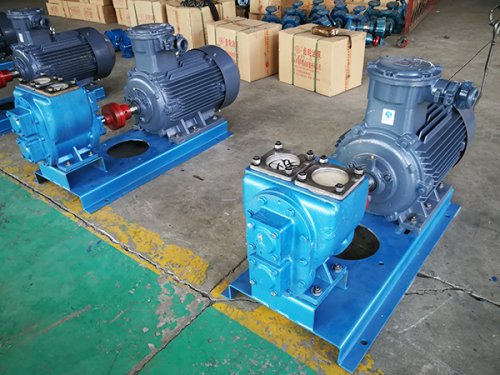
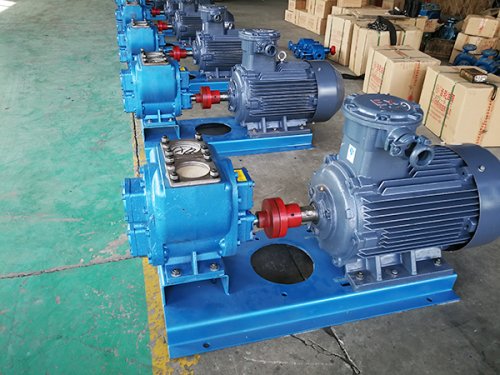
Asphalt gear pumps, as the core equipment for transporting high viscosity asphalt media, are widely used in areas such as road construction and water resistant material production. If abnormal vibration occurs during its operation, it will not only accelerate component wear and shorten equipment life, but may also cause secondary failures such as seal failure and pipeline fracture. Vibration problems are usually caused by abnormal gear meshing, shaft imbalance, installation defects, or changes in medium characteristics, and need to be resolved through systematic investigation and targeted treatment. The following provides a detailed explanation from three aspects: analysis of vibration causes, treatment measures, and prevention strategies.
1、 Analysis of the causes of vibration problems in asphalt gear pumps
1. Gear meshing fault
Gears are the core transmission components of asphalt gear pumps, and their meshing state directly affects the smoothness of operation. If the gear tooth surface is worn, pitted or chipped, it will cause uneven meshing clearance and generate periodic impact force; If the center distance deviation is too large during gear installation, or if the gear axis is not parallel to the pump body axis, it will cause the meshing line to shift and cause asymmetric vibration; In addition, insufficient hardness of gear materials or defects in heat treatment processes may lead to a decrease in tooth surface fatigue resistance, accelerated wear, and vibration.
2. Axis imbalance and looseness
If there is uneven mass distribution in the shaft system composed of pump shaft, coupling, and motor shaft (such as keyway wear and shaft head deformation), it will lead to unbalanced centrifugal force during rotation, resulting in periodic vibration; If the coupling is not aligned properly during installation (such as excessive end face clearance, axial displacement), or if the elastic element ages and fails, it will cause radial runout of the shaft system; If the bearing is not lubricated enough, the clearance is too large, or the retainer is damaged, it will cause unstable operation of the shaft system and generate high-frequency vibration.
3. Installation and foundation defects
If the foundation is uneven, the anchor bolts are loose, or the shock pads are aged during the installation of the pump body, it will cause a gap between the pump body and the foundation, and resonance will occur during operation due to the obstruction of vibration transmission; If flexible compensation devices are not used for pipeline connections, or if the stiffness of pipeline supports is insufficient, pipeline vibration may be caused by pressure fluctuations in the medium, which will be transmitted in the opposite direction to the pump body; In addition, if the concentricity correction is not carried out during the installation of the pump body and motor, it will cause eccentricity of the shaft system and cause vibration.
4. Influence of medium characteristics
Asphalt has the characteristics of high viscosity and easy solidification. If the conveying temperature is too low, the viscosity of asphalt increases, the flow resistance increases, and the pump needs to consume more energy to overcome the resistance, resulting in uneven gear load and vibration; If the temperature is too high, asphalt may undergo thermal decomposition, producing low molecular weight substances that can block the flow channel or change the density of the medium, causing pressure fluctuations in the pump and subsequently causing vibration; In addition, if impurities (such as sand particles and coke blocks) are mixed into the asphalt, they will jam the meshing parts of the gears and cause sudden vibrations.
5. Abnormal operation and working conditions
Frequent start stop, high rotational speed, or sudden changes in inlet and outlet pressure during operation can exacerbate fluid shock inside the pump, leading to increased vibration; If the pump operates under overload conditions for a long time (such as opening the inlet and outlet valves too small), it will cause gear overload, increase tooth contact stress, and cause vibration; In addition, if the suction conditions of the pump are insufficient (such as low liquid level in the storage tank or air resistance in the suction pipeline), it will cause insufficient suction in the pump, resulting in cavitation or semi filling state, and causing vibration.
2、 Targeted handling measures
1. Gear meshing repair and adjustment
Tooth surface inspection and repair: Disassemble the gearbox and inspect the tooth surface for wear, pitting, or chipping. If the wear is slight, the tooth profile can be repaired by polishing with an oilstone; If the pitting area is large or the teeth are broken, the gear pair needs to be replaced.
Mesh clearance adjustment: By adding or removing shims or adjusting the position of the bearing seat, the gear center distance is corrected to determine that the mesh clearance meets the requirements; Check the parallelism between the gear axis and the pump body axis, and reinstall the gear if necessary.
Material upgrade: For frequent wear and tear conditions, gear materials that are not afraid of fatigue (such as alloy steel) can be selected, and the heat treatment process can be optimized to improve the hardness and performance of the tooth surface.
2. Shaft balance and coupling calibration
Shaft dynamic balance: Conduct dynamic balance tests on pump shafts and couplings to remove uneven mass distribution; Check if the keyway is worn, and if it is severely worn, replace the key or shaft.
Coupling alignment: Use a laser alignment instrument to check the end face clearance and axial offset of the coupling, adjust the position of the motor or pump body, and ensure alignment accuracy; Replace the aging elastic components and restore the shock absorption function of the coupling.
Bearing maintenance: Check the bearing clearance, and replace the bearing if it is too large; Add lubricating grease to ensure sufficient lubrication of the bearings; Check if the cage is damaged, and replace the bearing if it is damaged.
3. Installation foundation and pipeline optimization
Foundation reinforcement: Check whether the pump body foundation is flat, and if it is uneven, pour concrete foundation again; Tighten the anchor bolts, replace the aging shock absorber pads, and remove the gap between the foundation and the pump body.
Flexible connection of pipelines: adding rubber flexible joints or expansion joints between the pump inlet and outlet and the pipeline to absorb pipeline vibration; Strengthen the pipeline support, enhance the stiffness of the support, and reduce the transmission of pipeline vibration.
Concentricity correction: Recheck the concentricity between the pump body and the motor, adjust the motor position using a dial gauge, and ensure that the shaft system is not eccentric.
4. Control of medium characteristics
Temperature management: Install a temperature sensor in front of the pump to monitor the real-time temperature of the asphalt; If the temperature is too low, adjust the power of the heating device or extend the preheating time; If the temperature is too high, it is necessary to lower the heating temperature or install a cooling device.
Medium purification: Install a multi-stage filtration device in front of the pump, regularly clean the filter screen, and remove impurities; For water containing asphalt, it is necessary to reduce the moisture content through dehydration equipment to prevent water vaporization and gas blockage.
5. Operating standards and adjustment of working conditions
Start stop control: Develop standard operating procedures to avoid frequent start stop of pumps; When starting or stopping, the valve should be operated slowly to reduce sudden pressure changes.
Load management: Adjust the speed through a frequency converter to avoid long-term overload operation; Adjust the opening of the inlet and outlet valves to ensure that the pump is operating in a good speed range.
Improvement of suction conditions: The liquid level in the storage tank is higher than the low suction height of the pump to avoid emptying; Install an exhaust valve in the suction pipeline to regularly discharge gas.
3、 Long term prevention strategy
1. Regular maintenance plan
Develop monthly and quarterly maintenance procedures for asphalt gear pumps, including cleaning the filter screen, checking gear meshing, replacing lubricating grease, and testing vibration parameters to ensure that the equipment is in good condition.
2. Spare parts reserve management
Reserve commonly used vulnerable parts (such as gears, bearings, and elastic components of couplings) to shorten downtime due to malfunctions; Regularly replenish spare parts inventory to prevent repair effectiveness from being affected by aging spare parts.
3. Run data monitoring
Install vibration sensors, temperature sensors, and pressure gauges to monitor the operating parameters of the pump in real-time, establish a vibration trend file, and promptly shut down for inspection if abnormal fluctuations are found.
4. Operator training
Provide technical training to operators, mainly explaining the causes of vibration, handling procedures, and emergency measures to avoid exacerbating vibration due to misoperation.
The vibration problem of asphalt gear pumps needs to be comprehensively addressed from multiple dimensions, including gears, shaft systems, installation, media, and operation. By repairing gear meshing, correcting shaft system balance, optimizing installation foundations, and standardizing operating procedures, vibration can be eliminated. At the same time, establishing a preventive maintenance system can significantly improve equipment performance and ensure production stability and continuity.