
Current location: ENGLISh > NEWS > Company News >
State monitoring during the trial operation of insulation gear pump
time:2025-12-06 02:12:56 author:特种泵阀 click:216
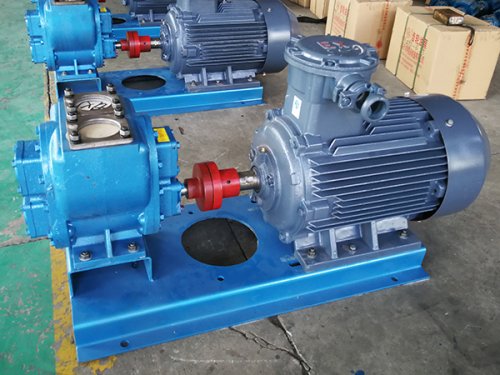
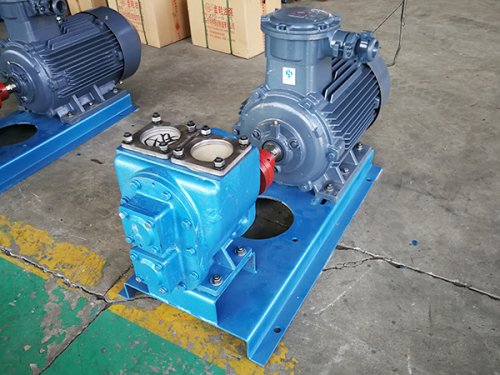
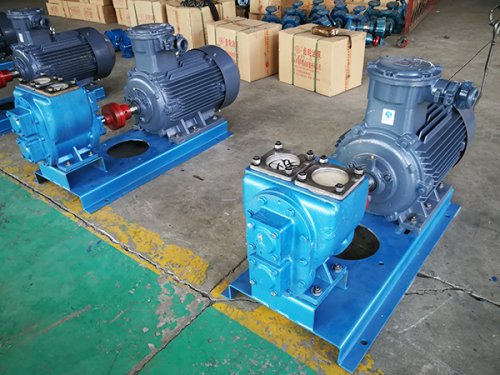
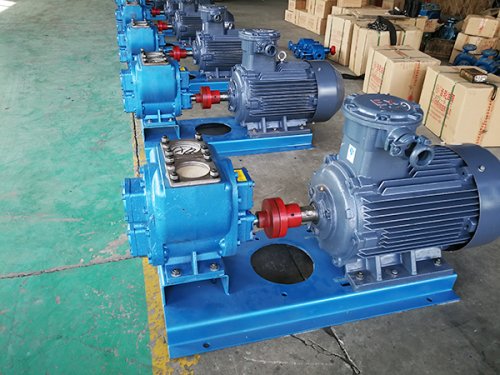
Insulated gear pumps, as key equipment for conveying high-temperature or low-temperature media, are widely used in chemical, food, and other areas. The trial process is not only an important step in verifying equipment performance, but also a crucial step in identifying potential problems and ensuring long-term stable operation. State monitoring can identify anomalies in advance and avoid the expansion of faults by capturing real-time device operating parameters. The following systematically elaborates on the key points of state monitoring during the trial operation of insulation gear pumps from four aspects: monitoring objectives, monitoring content, monitoring methods, and abnormal handling.
1、 Monitoring objective: Determine equipment stability and performance standards
The core objective of the insulation gear pump test is to verify the operational stability of the equipment under simulated working conditions, mainly monitoring the following aspects:
Mechanical state: Confirm whether the gear meshing, bearing operation, and shaft balance are normal to avoid vibration or leakage caused by mechanical failure.
Thermal management performance: Check the insulation layer effect, ensure that the medium temperature meets the requirements during transportation, and prevent medium solidification or viscosity changes caused by heat dissipation.
Sealing: Observe whether there is any leakage at the connection between the shaft seal and the pump body to determine whether the sealing system can adapt to changes in medium temperature and pressure.
Fluid characteristics: Monitor whether the flow rate and pressure fluctuations of the medium are within the allowable range to avoid performance degradation caused by channel blockage or cavitation.
Through comprehensive monitoring, defects in equipment or installation can be detected in a timely manner, providing a basis for subsequent optimization.
2、 Monitoring content: covering three dimensions: mechanical, thermal, and fluid
1. Mechanical condition monitoring
Vibration and noise: Use a handheld vibration meter or online monitoring system to capture vibration signals at the pump body, bearing seat, and coupling. Abnormal vibration may be caused by gear wear, bearing damage, or misalignment of the shaft system; An increase in noise may indicate poor gear meshing or sealing friction.
Temperature distribution: Monitor the temperature changes on the surfaces of bearings, gearboxes, and pump bodies through infrared thermometers or temperature sensors. Excessive bearing temperature may be due to insufficient lubrication or small clearance; Abnormal temperature of the gearbox may reflect increased gear friction or deteriorated lubricating oil.
Axis operation: Observe whether the coupling rotates smoothly and check whether there is any deviation at the shaft end seal. Misalignment of the shaft system can lead to accelerated wear of the coupling and even cause shaft fracture.
2. Thermal management performance monitoring
Insulation layer effect: Use an infrared thermal imager to scan the surface of the pump body and confirm whether there are local hot or cold spots in the insulation layer. Failure of insulation can lead to a decrease in the temperature of the medium, affecting the conveying rate; If the surface temperature is too high, it may pose a risk to the operators.
Medium temperature tracking: Install temperature sensors at the inlet and outlet of the pump to compare the deviation between the actual temperature of the medium and the value. Excessive temperature fluctuations may be caused by malfunctioning heating/cooling system control or air gaps between the insulation layer and the pump body.
Condensation risk: For low-temperature medium transportation, it is necessary to monitor whether there is condensation or frost on the surface of the pump body. The infiltration of condensed water into bearings or gearboxes can accelerate component corrosion and reduce equipment lifespan.
3. Sealing and leakage monitoring
Shaft seal leakage: Regularly check whether there is any medium leakage at the shaft seal. Minor leakage may be caused by aging of the sealing ring or improper installation; If there is continuous leakage, it is necessary to replace the seal or adjust the clamping force.
Pump body connection: Observe whether there is leakage at the flange and bolt connections. Leakage may be caused by incorrect gasket selection or insufficient tightening force, requiring reselection of gasket material or uniform tightening of bolts.
Breathing valve status: Check if the breathing valve at the top of the pump body opens and closes flexibly. Blockage of the breathing valve can cause abnormal pressure inside the pump, leading to seal failure or pump body deformation.
4. Fluid characteristic monitoring
Flow stability: Confirm whether the flow is continuous by using a flow meter or observing the flow state of the inlet and outlet media. Flow fluctuations may be caused by gear wear leading to changes in displacement, or by air resistance in the inlet pipeline causing evacuation.
Pressure changes: Monitor the readings of the inlet and outlet pressure gauges of the pump and analyze whether the pressure difference meets the requirements. Low pressure may be caused by channel blockage or a decrease in pump speed; If the pressure is too high, it may be due to the inlet and outlet valves being too small or the system resistance increasing.
Signs of cavitation: Listen for any abnormal sound of bubble rupture inside the pump and observe whether the inlet and outlet media carry gas. Cavitation can seriously damage the surface of gears, and it is necessary to reduce the medium temperature or increase the suction pressure to remove it.
3、 Monitoring method: Combining manual inspection and instrument analysis
1. Manual inspection
Timed recording: Record key parameters such as vibration, temperature, noise, etc. every half hour to form an operation log.
Visual inspection: Observe whether there are leaks, frost or deformation in the pump body, pipelines and seals.
Auditory judgment: Identify whether there are abnormal friction or impact sounds inside the pump through a stethoscope or direct listening.
2. Instrument monitoring
Online system: Install vibration sensors, temperature probes, and pressure transmitters to transmit real-time data to the control room for remote monitoring and alarm.
Portable devices: Use tools such as infrared thermal imagers and acoustic leak detectors to accurately detect major parts.
Oil analysis: Regularly collect lubricating oil samples from the gearbox, detect particle size, moisture, and metal debris content, and determine the degree of internal wear.
4、 Exception Handling: Fast Response and Root Cause Analysis
1. Vibration exceeding the standard
Temporary measure: Immediately stop the machine and check the alignment of the coupling, bearing clearance, and gear engagement.
Long term plan: If it is caused by gear wear, the gear pair needs to be replaced; If the axis is unbalanced, dynamic balance correction is required.
2. Abnormal temperature
Bearing overheating: Add lubricating grease and check if the lubricating oil circuit is unobstructed; If the temperature continues to rise, the bearings need to be replaced.
Insulation failure: repair the damaged insulation layer and refill the insulation material; For areas with frequent failures, insulation materials with better performance can be used instead.
3. Leakage treatment
Shaft seal leakage: Adjust the sealing compression force and replace the aging sealing ring; If it is a mechanical seal, it is necessary to check the parallelism between the moving ring and the stationary ring.
Flange leakage: Re tighten the bolts and replace the damaged gaskets; For high-temperature media, it is necessary to use heat-resistant materials such as graphite composite gaskets.
4. Flow pressure fluctuations
Channel blockage: Disassemble the pump body, clean impurities between gears or channels; If it is a medium agglomeration, the heating or stirring system needs to be optimized.
System resistance: Check the opening of the inlet and outlet pipeline valves and adjust the system back pressure; If it is a pipeline issue, the diameter and length need to be recalculated.
The state monitoring during the trial operation of the insulation gear pump needs to cover three dimensions: mechanical, thermal, and fluid. Through a combination of manual inspection and instrument analysis, abnormal equipment operation can be captured in real time. Once the parameters are found to deviate from the normal range, the machine should be immediately shut down for troubleshooting, and the root cause should be analyzed from multiple perspectives such as installation and operation, and targeted measures should be taken. By monitoring the system's status, the success rate of the insulation gear pump's trial operation can be significantly improved, laying the foundation for long-term stable operation in the future.