
Current location: ENGLISh > NEWS > Company News >
The gear oil pump has a compact structure and strong adaptability
time:2025-09-21 02:35:58 author:特种泵阀 click:241
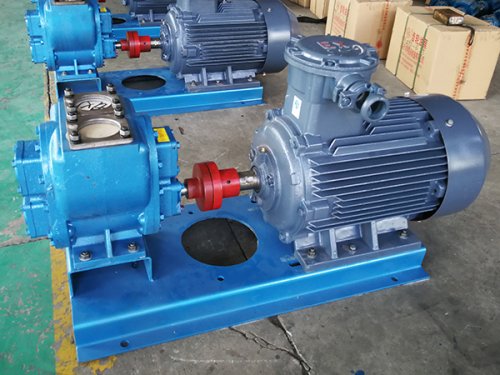
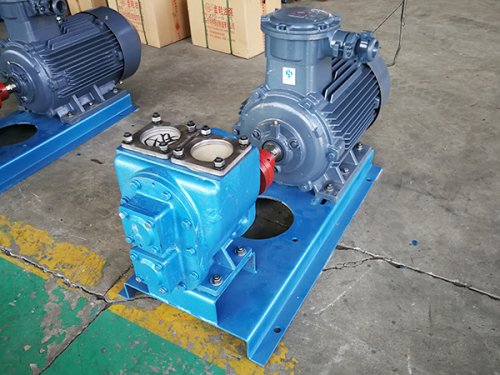
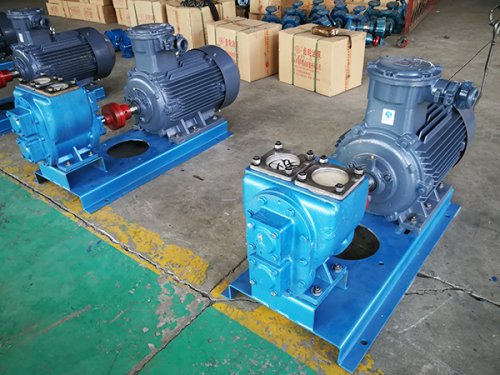
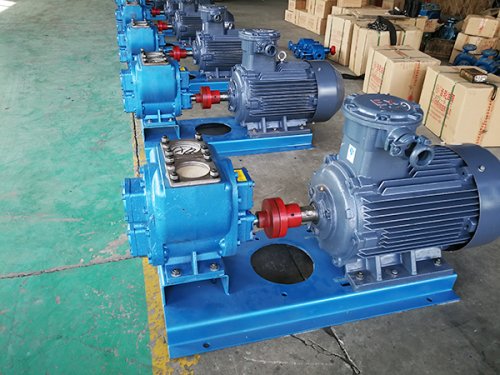
Gear oil pumps, as the core equipment in industrial fluid transportation areas, play a role in hydraulic systems, lubrication devices, and chemical processes due to their compact structure and strong adaptability. It cleverly integrates the essence of mechanical engineering and materials, optimizing internal structure and material selection to achieve fast energy conversion in limited space, while demonstrating adaptability to complex working conditions. The following systematically analyzes the compactness and adaptability advantages of gear oil pumps from four dimensions: structure, material application, working condition compatibility, and maintenance convenience.
1、 Structure: Utilization of Space
The core structure of a gear oil pump consists of a driving gear, a driven gear, a pump body, and an end cap, and each component forms a closed volume through cooperation. Its compactness was initially reflected in the optimization of axial dimensions: by shortening the gear width and axial clearance, the pump body length was significantly reduced while determining the displacement, making it easy to fit into narrow spaces of hydraulic systems or lubrication devices. For example, some models of gear oil pumps can even control the axial size within the palm range, but can output stable flow and pressure. This "small size, big energy" characteristic makes them a choice for mobile devices or compact machinery.
The radial layout also embodies the concept of compactness. The pump body adopts a cylindrical or square shell, and the internal gears and bearings are arranged radially. By optimizing the gear module and tooth width, a large flow output is achieved in a limited radial space. The bolt connection between the end cap and the pump body further compresses the axial thickness, while determining the sealing and rigidity. The thickness of the end cover of a certain type of gear oil pump only needs to meet the requirements of bolt fastening, but it can withstand the deformation stress under high-pressure conditions. This "thin yet strong" philosophy is the correct balance between compactness and performance.
2、 Material application: Diversified adaptation to working conditions
The material selection of gear oil pump directly determines its adaptability to different media. For cleaning media such as hydraulic oil and lubricating oil, the pump body and gears are often made of cast iron or aluminum alloy. These materials have both cost advantages and performance, and can meet the long-term operational needs under conventional working conditions. For media containing particles or corrosive substances, it is necessary to upgrade to materials such as stainless steel, duplex steel, or hard alloy. For example, gear oil pumps that transport chemical raw materials have tungsten carbide coatings on their gear surfaces, with a hardness of HRC or higher. Even when facing hard particles such as quartz sand, they can maintain the smoothness of the tooth surface, avoiding leakage or rate reduction caused by wear.
The properties of the sealing material further expand its adaptability to working conditions. The dynamic and static rings of mechanical seals can be made of materials such as silicon carbide, ceramics, or carbon graphite. The pairing combination can be selected according to the characteristics of the medium: silicon carbide is suitable for high temperature and high pressure working conditions for silicon carbide, while carbon graphite is less prone to corrosion for stainless steel. The packing seal is made of materials such as flexible graphite and polytetrafluoroethylene to achieve compatibility with acidic, alkaline, or media. A certain type of gear oil pump is even equipped with replaceable sealing modules, allowing users to quickly replace seals according to the type of medium, without the need to replace the pump body as a whole. This "modular sealing" greatly improves the flexibility of adapting to working conditions.
3、 Compatibility of working conditions: universality of environmental adaptation
The adaptability of gear oil pumps is also reflected in their wide range coverage of temperature, pressure, and speed. By optimizing the gear tooth profile and clearance, the pump body can maintain the fluidity of lubricating oil at low temperatures, avoiding dry grinding during start-up; Under high temperature conditions, the leakage caused by the decrease in medium viscosity can be prevented by expanding the heat dissipation area or using air-cooled/water-cooled structures. For example, some gear oil pumps have annular heat dissipation grooves on the surface of the pump body, which can accelerate heat dissipation and maintain stable performance even after long-term operation in high-temperature environments.
The adaptability to pressure is the same. By enhancing the wall thickness of the pump body and bearing stiffness, the gear oil pump can withstand a wide range of pressure fluctuations from low pressure to high pressure. In hydraulic systems, the inlet and outlet pressures can be accurately controlled by adjusting the relief valve, and the pump body itself will not deform or leak due to sudden pressure changes. The speed adaptability benefits from the processed gears and bearings: under working conditions, gear dynamic balance can reduce vibration and avoid premature bearing failure; Under low-speed conditions, optimizing the tooth surface lubrication structure and oil film thickness can prevent wear caused by boundary lubrication.
4、 Maintenance convenience: optimization of usage costs
The compact structure does not sacrifice the maintenance convenience of the gear oil pump. The pump body adopts a split type design, with the end cover and pump body connected by bolts. When disassembling, only the bolts need to be loosened to expose the internal gears and bearings, without the need for technical tools or complex processes. For example, when replacing gears, the operator can quickly remove the end cover, take out the old gear, and install a new part. The entire process is time-consuming and does not require adjusting other parts of the pump body. This "no debugging" significantly reduces maintenance costs.
The replacement of seals is equally convenient. Mechanical seals are fixed with snap springs or bolts, and there is no need to damage the pump body structure during disassembly and assembly; The packing seal is adjusted by tightening the gland bolts, and when adding packing, only the gland needs to be loosened and new packing needs to be added without stopping the machine for a long time. A certain type of gear oil pump even has a transparent window, allowing users to visually observe the status of the packing, plan maintenance cycles in advance, and avoid unplanned shutdowns caused by leaks.
The compactness and adaptability of gear oil pumps are a concentrated reflection of their wisdom and engineering practice. Through efficient space utilization, diversified material selection, wide range of compatible working conditions, and convenient maintenance, gear oil pumps continue to play a key role in hydraulic systems, lubrication devices, and chemical processes, becoming a model of "small but strong" in industrial areas.