
Current location: ENGLISh > NEWS > Company News >
Preventive measures and solutions for gear pumps
time:2025-09-25 02:36:10 author:特种泵阀 click:145
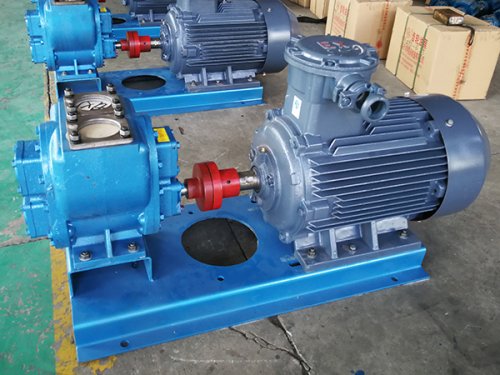
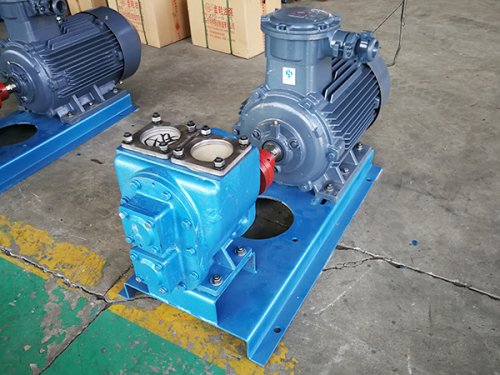
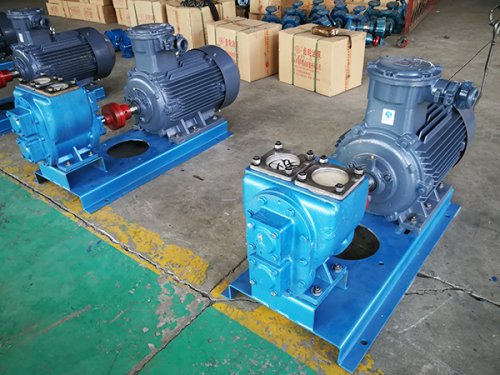
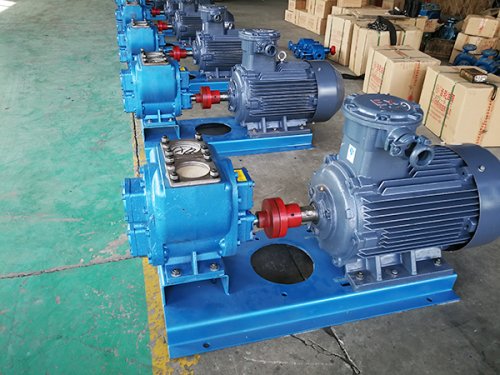
Gear pumps, as the core equipment for transporting high viscosity, particulate or corrosive media in industrial areas, have a direct impact on the continuity and stability of the production system through their stable operation. However, due to long-term exposure to high pressure and complex medium conditions, gear pumps are prone to malfunctions caused by wear, corrosion, seal failure, or improper operation. By implementing systematic preventive measures and targeted solutions, the failure rate can be significantly reduced and the lifespan of equipment can be extended. The following discussion will be conducted from four dimensions: optimization, operation management, maintenance, and emergency response.
1、 Optimization: Improve equipment performance from the source
The gear pump needs to fully consider the characteristics of the medium and the requirements of the working conditions. For media containing particles, gears and shaft sleeves made of hard alloy or tungsten carbide materials should be used. These materials have good hardness and strong wear resistance, which can reduce the wear of the tooth surface and shaft sleeve. For example, when a chemical plant transports media containing quartz sand, the service life of the equipment is extended from six months to over two years by replacing ordinary gears with hard alloy gears. For corrosive media, corrosive materials such as stainless steel or duplex steel should be selected and coated inside the pump body to form a dual protective barrier.
The direct impact of sealing structure on leakage risk. Mechanical seals should adopt a balanced type, reducing friction on the sealing surface through pressure compensation, and using strong silicon carbide or ceramic dynamic rings to avoid seal failure caused by medium erosion. For packing sealing, it is necessary to optimize the packing material and compression method, using flexible graphite or polytetrafluoroethylene packing, and equipped with adjustable gland bolts, which can not only determine the sealing performance but also avoid shaft wear caused by overly tight gland. A certain enterprise once caused frequent leakage of the pump body due to incorrect sealing. Later, by switching to a balanced mechanical seal and optimizing the packing structure, the leakage problem was completely solved.
2、 Operation management: standardize operations to reduce the risk of malfunctions
Pre startup inspection is a crucial step in operational management. The operator needs to confirm that the bolts at all connection parts of the pump body are tightened, including the inlet and outlet flanges and the motor coupling, to avoid leakage or shaft fracture caused by bolt loosening due to vibration. At the same time, it is necessary to check the level and quality of the lubricating oil. If the lubricating oil is cloudy or contains impurities, it should be replaced with new oil immediately to prevent lubrication failure from causing dry wear of gears or bearings. For example, a cement plant failed to replace lubricating oil containing iron filings in a timely manner, resulting in abrasive wear on the gear teeth surface, and ultimately requiring early replacement of gear components.
The monitoring during operation should mainly focus on pressure, temperature, and vibration parameters. If there is abnormal pressure fluctuation at the inlet and outlet, it may be due to pipeline blockage or incomplete valve opening. It is necessary to promptly investigate and avoid pressure build-up in the pump body; If the temperature of the bearing continues to rise, it may be due to insufficient lubrication or bearing damage. It is necessary to immediately stop the machine for inspection and replenish lubricating grease or replace the bearing. In addition, it is necessary to avoid frequent starting and stopping of the pump body, as sudden changes in medium flow rate and pressure during each start and stop can exacerbate gear impact and shorten equipment life. A certain steel enterprise once experienced fatigue cracks on the gear tooth tip due to frequent starting and stopping of the pump body by the operator. During maintenance, it was found that the cracks had extended to the tooth root and the gearbox needed to be replaced as a whole.
3、 Maintenance and upkeep: meticulous maintenance to extend equipment lifespan
Regularly replacing lubricating oil is the core task of maintenance and upkeep. Lubricating oil not only needs to have lubrication function, but also needs to undertake cooling and cleaning functions. After long-term operation, lubricating oil will deteriorate due to oxidation, high temperature, or medium pollution. If not replaced in time, the deteriorated oil will form sludge and adhere to the surfaces of gears and bearings, exacerbating wear. It is recommended to take samples of lubricating oil for testing every quarter. If the acid value exceeds the standard or the viscosity decreases, new oil should be replaced immediately; At the same time, it is necessary to clean the sludge at the bottom of the fuel tank to prevent secondary pollution after adding new oil.
The maintenance cycle of seals needs to be adjusted according to the working conditions. The contact surface between the dynamic and static rings of the mechanical seal should be kept clean. If the medium contains solid particles, a filter should be installed at the inlet of the pump body to prevent particles from embedding into the sealing surface and causing leakage. The sealing of the packing requires regular adjustment of the tightness of the gland. If it is found that the packing box is heating up or the leakage is increasing, the gland should be loosened appropriately and new packing should be added. A certain food enterprise once caused medium leakage and product contamination due to failure to timely replace aging mechanical seals. Later, by establishing a regular replacement system for seals, similar accidents were avoided from happening again.
4、 Emergency response: Quick response to reduce downtime losses
When there is abnormal vibration or noise in the pump body, it is necessary to immediately stop the machine for inspection. Abnormal vibration may be caused by poor gear meshing or bearing damage. After disassembly, it is necessary to check whether the gear tooth surface has pitting, peeling or broken teeth. If the damage is minor, it can be repaired by grinding. If the damage is severe, the gear needs to be replaced with a new one; If the bearing is damaged, the clearance needs to be measured. If it exceeds the standard, the bearing of the same model needs to be replaced. A certain manufacturing enterprise once caused the gearbox to rupture due to the failure to timely handle abnormal vibration of the pump body. During maintenance, it was found that the gear tooth surface had been severely worn and the gearbox and bearing components needed to be replaced as a whole.
Media leakage is another common type of malfunction. If there is a leakage in the packing seal, it can be temporarily treated by tightening the gland bolts or supplementing the packing, but new packing needs to be replaced as soon as possible; If it is a mechanical seal leakage, it is necessary to check whether the contact surface between the moving ring and the stationary ring is scratched or worn. If there are scratches or wear, the seal should be replaced and the spring compression should be readjusted. A certain chemical enterprise once failed to deal with mechanical seal leakage in a timely manner, resulting in the corrosion of the pump body base by the medium. Later, the entire pump body structure needed to be replaced, and the maintenance cost increased significantly.
The stable operation, operation, maintenance, and emergency response of gear pumps require full process coordination. By optimizing and improving equipment adaptability, standardizing operations to reduce operational risks, meticulous maintenance to extend service life, quick response to reduce downtime losses, a comprehensive system for determining the entire life cycle of gear pumps can be established, providing solid support for the continuous and stable operation of industrial production.