
Current location: ENGLISh > NEWS > Company News >
A brief introduction to the precautions and sealing forms for the use of gear oi
time:2018-11-27 04:34:14 author:特种泵阀 click:466
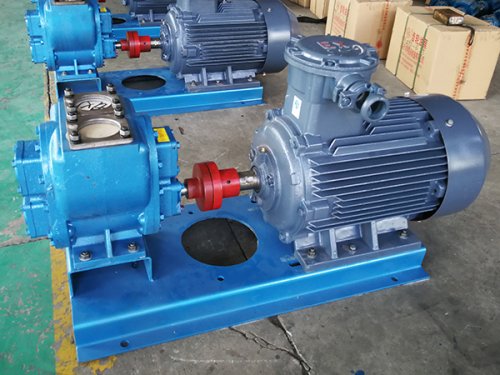
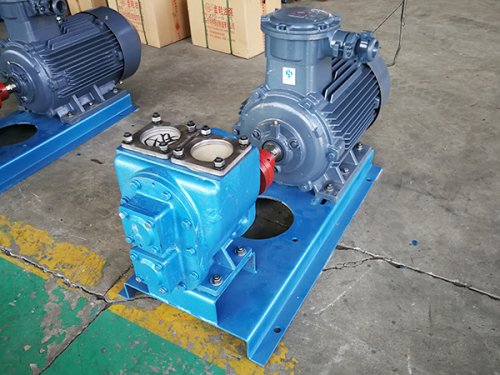
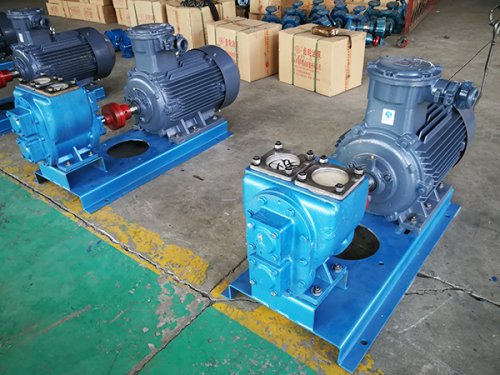
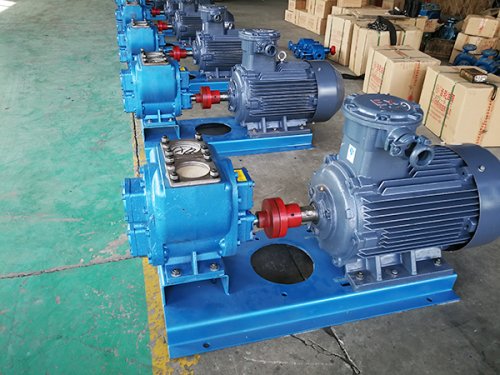
Various sealing forms are used in the gear oil pump industry, mainly divided into the following: skeleton oil seal, gasket seal, thread seal, labyrinth seal, packing seal, power seal, and mechanical seal. When arranging pipelines for gear oil pumps, the following precautions should be taken:
1. Choose the diameter of the gear oil pump pipeline. A larger pipeline diameter results in lower fluid flow velocity and less resistance loss at the same flow rate. However, a higher price and smaller pipeline diameter can lead to a sharp increase in resistance loss, resulting in an increase in the head and power of the selected pump, as well as higher costs and operating expenses. Therefore, a comprehensive consideration should be given from both technical and economic perspectives.
2. The discharge pipe and its pipe joints should consider the maximum pressure they can withstand.
3. The pipeline layout should be arranged as straight pipes as possible, minimizing the number of accessories in the pipeline and minimizing the length of the pipeline. When turning, the bending radius of the elbow should be 3-5 times the diameter of the pipeline, and the angle should be greater than 90 ℃ as much as possible.
4. Valves (ball valves or globe valves, etc.) and check valves are installed on the discharge side of the pump. Valves are used to adjust the operating point of the pump, and check valves can prevent the pump from reversing and prevent the pump from being hit by water hammer when the liquid flows back. When the liquid flows back, a huge reverse pressure will be generated, causing damage to the pump
The impact of the flow and head of the gear oil pump is as follows:
1. If a smaller, normal, or larger flow rate has been given in the production process, the larger flow rate should be considered.
2. If only normal flow rate is given in the production process, consideration should be given to leaving some margin.
For the high flow low head pump of NS100, a flow margin of 5% is taken, and for the low flow high head pump of NS50, a flow margin of 10% is taken; For pumps with a capacity of 100, a flow margin of 5% should also be taken. For pumps with poor quality and harsh operating conditions, a flow margin of 10% should be taken.
3. If the basic data only provides weight flow rate, it should be converted to volume flow rate.
In addition, the skeleton sealing forms of gear oil pumps mainly include the following:
Skeleton seal: It is a self tightening lip seal with a simple structure, small size, low cost, easy maintenance, and low resistance torque. It can prevent medium leakage, as well as external dust and other substances from entering. It also has the ability to compensate for wear, but is not resistant to high pressure. Therefore, it is generally used in gear oil pumps for low-pressure applications, such as KCB series gear oil pumps and 2CY series gear oil pumps.
Gasket sealing: Gasket is the basic component of centrifugal pump static sealing, with a wide range of applications. The selection of gaskets is mainly determined by factors such as the conveying medium, temperature, pressure, and corrosiveness of chemical pumps. Mainly used for sealing the pump body of Y-shaped centrifugal pumps, the material is mostly aluminum sheet.
Threaded seal: There are generally two forms of sealing on chemical pumps, one is the threaded gasket seal, and the other is the threaded filling seal, both of which are used for sealing small diameter threaded connections. The sealing element for the gasket seal of the threaded electric diaphragm pump is the gasket, while the thread only serves to provide clamping force. This seal is used in the gear pump series and can be used for on-site emergency purposes.
Maze seal: When the processing and assembly are complete and the speed is high, the labyrinth seal effect is very good. However, in practical applications, there are many chemical pump leaks caused by this, so it is not commonly used in chemical pump sealing.
Packing sealing: It is the process of placing compressed and resilient packing into a packing box, and converting the axial compression force of the gland into radial sealing force to achieve a sealing effect. This sealing method is called packing sealing, and this packing is called sealing packing. Due to its simple structure, easy and cost-effective replacement, and adaptability to a wide range of speeds, pressures, and media, packing sealing is widely used in gear pumps. For example, YCB series products and so on.
Power seal: When the chemical pump is in operation, the pressure head generated by the secondary impeller balances the high-pressure liquid at the outlet of the main impeller, thereby achieving sealing. When parking, the auxiliary impeller does not work, so a parking sealing device is also equipped to solve the possible chemical pump leakage during parking. The sealing structure of the secondary impeller is simple, sealed, and has a long service life. It can achieve no leakage during the operation of chemical pumps, so it is often used in pumps that transport media containing impurities.
Mechanical seal: Nowadays, the chemical pump industry uses a relatively common sealing form. Due to its advantages of low leakage and long service life, mechanical seals are the main shaft sealing method in these equipment in the world today. Mechanical seal, also known as end face seal, is defined in relevant standards as follows:; A device that prevents fluid leakage by maintaining contact and sliding relative to at least one pair of end faces perpendicular to the axis of rotation under the action of fluid pressure and compensation mechanism elasticity (or magnetic force), as well as the cooperation of auxiliary sealing. This seal can be used universally for gear pump series with skeleton seal and packing seal, and has significant characteristics such as no leakage and long service life.