
Current location: ENGLISh > NEWS > Procurement Guide >
Adjustment, installation, and inspection of gear oil pump assembly
time:2025-10-19 02:38:19 author:特种泵阀 click:194
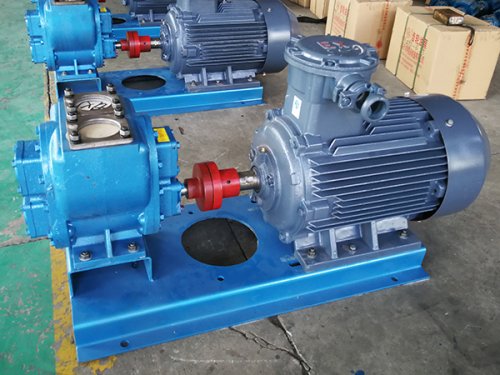
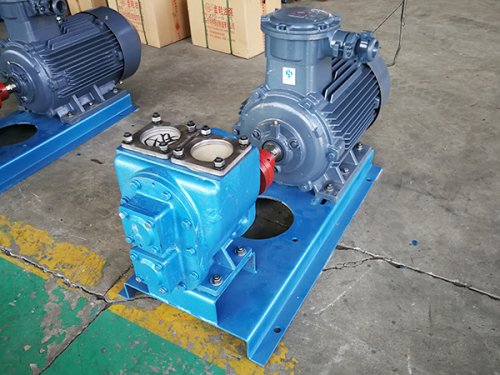
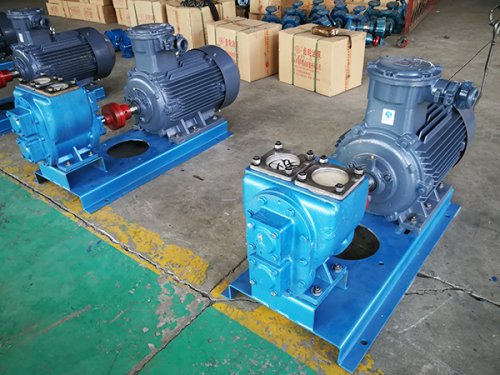
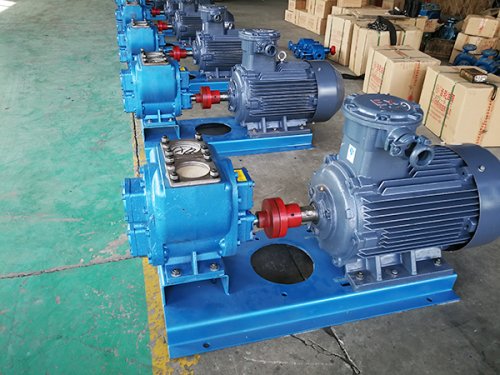
As the core power component of hydraulic or lubrication systems, the precision of installation, adjustment, and assembly inspection of gear oil pumps directly affects the stability and service life of equipment operation. From basic installation to dynamic debugging, each link must follow mechanical principles and process specifications, and determine the fitting accuracy of key components such as gear pairs, seals, and bearings through systematic operations to avoid problems such as leakage, vibration, or rate attenuation caused by assembly deviations.
1、 Preparation before installation: dual verification of environment and components
The flatness of the basic installation surface is the cornerstone of stable equipment operation. Before installation, the foundation surface needs to be cleaned to remove oil stains, rust, and protruding particles, and the contact surface should be smooth and defect free. If there is a slight inclination in the foundation, it can be leveled by adding adjusting shims to avoid deformation of the pump body due to uneven stress. For example, a certain enterprise once caused slight tilting of the pump body after installation due to failure to check the flatness of the foundation. After operation, the gear shaft was subjected to additional radial force, which led to wear of the shaft sleeve in a short period of time.
Strict control of component cleanliness is the key to preventing early failure. All parts need to be degreased and cleaned to remove residual cutting fluid, rust proof oil, and metal shavings from processing. Attention should be paid to concealed parts such as gear chambers, bearing positions, and sealing grooves. After cleaning, it is necessary to dry it with compressed air or wipe it with a dust-free cloth, and immediately assemble it to prevent secondary pollution. In a certain maintenance case, due to incomplete cleaning of the pump body, residual metal debris scratched the gear end face during operation, resulting in a sharp increase in leakage.
The compatibility check of supporting pipelines is often overlooked but important. The diameter of the inlet and return pipes should match the pump body interface to avoid changes in flow resistance caused by sudden changes in pipe diameter. When connecting pipelines, it is necessary to use sealing gaskets or sealants to ensure uniform thread tightening force and prevent high-pressure oil from leaking from the interface. In addition, pipeline layout should avoid sharp bends or excessive length to reduce pressure loss and vibration transmission.
2、 Core control of assembly process: dual determination of accuracy and sequence
The meshing adjustment of gear pairs is the core process of assembly. The driving gear and the driven gear need to be installed in the marked direction, with the meshing line located in the middle of the pump body. During assembly, the contact condition of the tooth surface can be detected by red lead powder. If the contact spot is biased towards the tooth top or root, the meshing position needs to be corrected by adjusting the bearing clearance or grinding the positioning surface. A certain model of gear pump had abnormal noise and temperature rise after operation due to the gear direction being reversed during assembly, causing the meshing area to deviate from its position.
The dynamic matching of bearing clearance directly affects the service life of equipment. The clearance of radial bearings needs to be preliminarily judged through a feeler gauge or sensing method, and then verified through loading and trial operation: too small clearance will limit the thermal expansion space, while too large clearance may cause axial play. The pre tightening force of the axial bearing needs to be achieved by adjusting the end cap nut. Insufficient pre tightening can cause axial displacement of the gear shaft, while excessive pre tightening may accelerate bearing wear. For example, a maintenance personnel failed to control the pre tightening force of the bearing, resulting in the bearing failing due to overheating in the short term.
The installation of sealed structures is a defense line to prevent leakage. The dynamic and static rings of mechanical seals need to be kept clean, and lubricating grease should be applied during installation to reduce starting friction. The compression amount of the spring needs to be adjusted according to the instructions. Insufficient compression may cause poor contact of the sealing surface, while excessive compression may crush the seal. For packing sealing, it is necessary to gradually tighten the packing gland to achieve sealing. Over tightening will aggravate the wear of the shaft sleeve, while over loosening will not prevent leakage.
3、 Debugging and inspection after installation: dual verification of dynamic and static
The completeness of static inspection can eliminate hidden dangers in advance. After assembly, manual turning is required to check whether the gear rotation is flexible, whether there is any jamming or abnormal noise. If the resistance of the turning gear is too high, it may be due to improper installation of bearings or tight gear meshing; If periodic abnormal noise occurs, it may be due to damage to the gear tooth surface or defects in the bearing raceway. In addition, it is necessary to check whether all connecting bolts are tightened, which are the coupling bolts between the pump body and the motor, to prevent loosening during operation.
The asymptotic nature of dynamic debugging is the key to determining stability. Before starting, it is necessary to open the inlet valve and exhaust the air inside the pump through the exhaust plug to avoid cavitation. After starting, it is necessary to run without load for a period of time, observe whether the pressure gauge pointer is stable, and listen for any abnormal noise inside the pump body. If the pressure fluctuates violently, it may be due to blockage of the oil inlet pipe or excessive gear clearance; If the noise is sharp, it may be due to bearing damage or gear pitting.
Real time monitoring of operating parameters can prevent early failures. Key indicators such as pump body temperature, inlet and outlet pressure, and vibration values need to be recorded and compared with the parameters for analysis. Excessive temperature may be due to poor lubrication or insufficient cooling, insufficient pressure may be due to leakage or low motor speed, and excessive vibration may be due to poor alignment or loose foundation. A certain enterprise successfully discovered abnormal vibration in the gear pump before severe wear and tear occurred by establishing operational records, avoiding unplanned shutdowns.
The installation, adjustment, and assembly inspection of gear oil pumps require the integration of mechanical theory, process experience, and equipment characteristics. Through standardized operations and meticulous control, the quality of the entire process from static assembly to dynamic operation can be controlled. This not only requires operators to have solid technical skills, but also to form a maintenance concept of "prevention first, process control", laying the foundation for long-term stable operation of equipment.