
Current location: ENGLISh > NEWS > Procurement Guide >
Gear pump assembly and medium issues
time:2025-10-23 02:38:33 author:特种泵阀 click:161
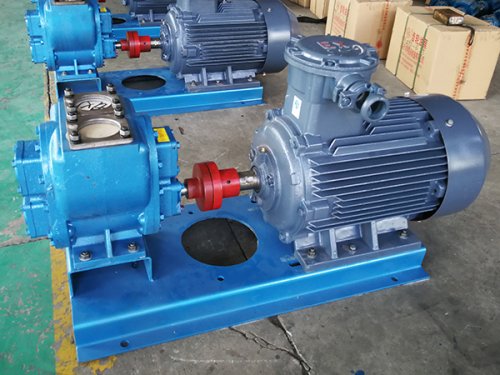
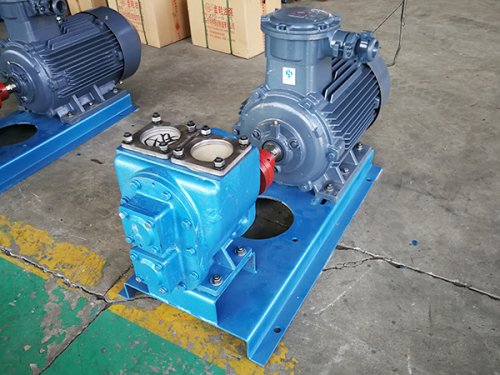
As the core component of positive displacement fluid conveying equipment, the assembly quality and medium adaptability of gear pumps directly affect the stability and service life of equipment operation. From mechanical structure to fluid characteristics, assembly process and medium selection need to form a systematic matching, and any omission in any link may cause problems such as leakage, vibration, or rate reduction.
1、 The core influence of assembly process on the performance of gear pumps
The coordination between gears and shafts is the main step in assembly. The interference fit between gears and shafts needs to be achieved through hot fitting or hydraulic pressing. If the fit clearance is too large, it is easy to produce radial runout during rotation, resulting in increased friction between the gear end face and the pump body; If the gap is too small, it may cause jamming due to thermal expansion. For example, a certain model of gear pump did not strictly control the radial runout of the gear shaft during assembly, and due to gear eccentricity during operation, the end face wear rate increased and the volumetric rate decreased. In addition, the adjustment of gear meshing clearance needs to take into account both sealing and performance: a too small clearance will intensify tooth friction, while a too large clearance may cause oil entrapment, leading to pressure fluctuations and noise.
The sealing structure is the key to preventing leakage. End face seals usually use floating shaft sleeves or mechanical seals, and their installation requires parallelism with the gear end face. If the clearance between the floating shaft sleeve and the pump body exceeds the tolerance, the oil in the high-pressure oil chamber may leak into the low-pressure chamber through the end face, causing a loss of volume rate. A certain enterprise once experienced oil seal aging and leakage in a short period of time due to the impact of trapped oil pressure on the seal caused by the failure to open an unloading groove on the pump body end cover. In addition, the compression amount of the spring of the mechanical seal needs to be strictly adjusted according to the standard. Insufficient compression can lead to poor contact of the sealing surface, while excessive compression may accelerate the wear of the seal.
The alignment accuracy of bearings and couplings directly affects the vibration level of equipment. When installing bearings, it is necessary to control the clearance range. If the clearance is too small, it will limit the thermal expansion space, and if it is too large, it may cause axial movement. For the alignment adjustment of the coupling, a dial indicator shall be used to detect the radial and axial deviation. If the deviation exceeds the standard, the force on the motor and pump body will be uneven. Long term operation may lead to shaft fracture failure. For example, a certain chemical enterprise had a gear shaft bend due to misalignment of the coupling, and after repair, it was necessary to recalibrate the concentricity and replace the damaged bearings, resulting in significant economic losses.
2、 The constraint mechanism of medium characteristics on gear pump selection
The adaptability of lubricating media needs to be matched with materials and structures. For media such as lubricating oil and vegetable oil, cast iron or stainless steel pump bodies can meet the requirements, but attention should be paid to the influence of medium temperature on sealing materials. High temperature media should use fluororubber or polytetrafluoroethylene seals, while low-temperature media should avoid hardening and brittle cracking of seals. A certain food processing enterprise used ordinary rubber seals to transport low-temperature peanut oil, but leakage occurred due to seal shrinkage. Later, low-temperature fluororubber was used to solve the problem.
The special treatment of non lubricating media is a technical difficulty. Low viscosity media (such as solvents and thin oils) are prone to leakage through gear clearances, requiring the use of machined gear pairs and wear-resistant shaft sleeves. A certain paint production enterprise successfully controlled the leakage within the correct range by reducing the gear clearance and selecting tin bronze shaft sleeves when transporting thinner materials. For high viscosity media (such as asphalt and resin), a reducer or variable frequency motor should be installed to reduce the speed and avoid carbonization of the medium due to shear heat generation.
The material compatibility of corrosive media determines the lifespan of equipment. Acidic or alkaline media should use corrosion-resistant materials such as stainless steel and Hastelloy, and optimize the flow channel structure to reduce dead corners. When transporting hydrochloric acid in a chemical plant, the ordinary carbon steel pump body was corroded and perforated. After switching to 316L stainless steel pump body, the operation became stable. In addition, a filter should be installed at the pump inlet for media containing solid particles, and the particle size should be controlled to be smaller than the gear clearance to prevent jamming or wear.
3、 Collaborative optimization strategy for assembly and media
Dynamic debugging and media preprocessing can expose potential issues in advance. After assembly, a no-load test run is required to detect vibration, noise, and temperature rise indicators, and then gradually load to the rated operating conditions. For high viscosity media, the pump body needs to be preheated before trial operation to reduce the starting torque. When a certain rubber enterprise transports high-temperature vulcanized rubber, it improves the flowability of the medium by wrapping heating tape around the outside of the pump body, successfully avoiding startup jamming.
Online monitoring and intelligent maintenance can extend the lifespan of equipment. By installing pressure sensors and vibration monitoring modules, the operating status of the pump body can be tracked in real time. When the pressure fluctuation exceeds the set value, the system automatically adjusts the speed or alerts for maintenance. After a certain oil company adopted an intelligent monitoring system, the average maintenance interval of gear pumps was extended, and the failure rate caused by medium pollution decreased.
The assembly process and medium adaptability of gear pumps need to form a closed-loop management: the mechanical accuracy needs to be strictly controlled during the assembly stage, the medium selection needs to match the fluid characteristics, and the parameters need to be continuously optimized through monitoring data during the operation stage. Through systematic technological integration, the performance of gear pumps under complex working conditions can be significantly improved, providing stable and reliable solutions for industrial fluid transportation.