

Current location: ENGLISh > NEWS > Company News >
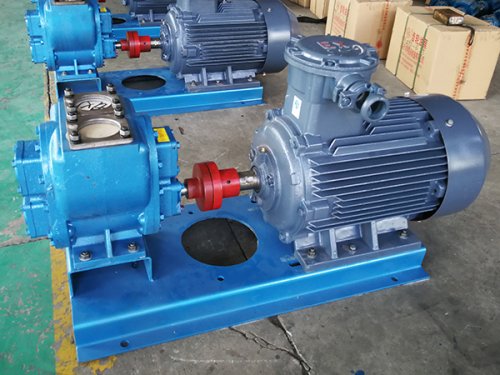
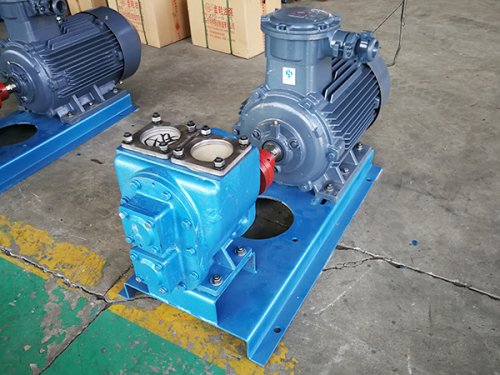
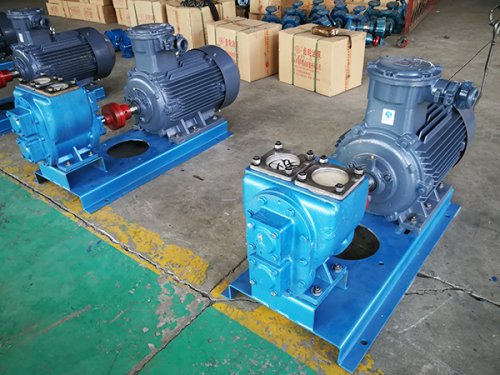
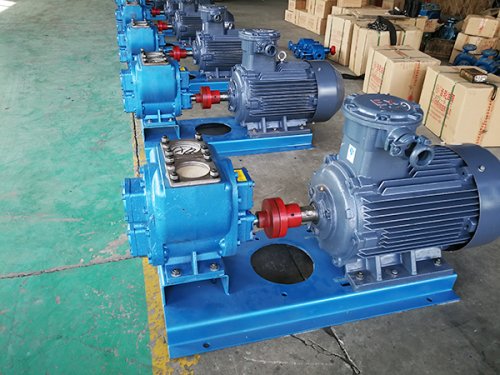
Self suction centrifugal oil pump storage rust prevention treatment
time:2026-06-25 08:47:42 author:特种泵阀 click:146
During the long-term storage of self-priming centrifugal oil pumps, rust prevention treatment is the core work to maintain equipment performance and prevent internal parts from rusting and failure. Once metal parts rust, it will directly damage the fitting accuracy, affect the suction and pressure of the pump body, and even lead to equipment scrapping. Standardized rust prevention treatment should be carried out throughout the entire process from pre-treatment before storage, storage process control to inspection before use, in order to block the cause of rust and maintain the integrity of the pump body.
Disassembling and cleaning before storage is the foundation of rust prevention treatment. Only by completely removing residual media and impurities can a solid foundation be laid for subsequent rust prevention and protection. At first, it is necessary to completely discharge the residual conveying medium inside the pump chamber, inlet and outlet pipelines, and impeller chamber. The residual medium often contains impurities and moisture, which will slowly corrode the metal wall surface if left for a long time. After draining, rinse the inside of the pump chamber with a clean neutral cleaning agent to remove the oil sludge, impurities, and residual medium attached to the impeller, pump casing, and sealing ring positions. After rinsing, dry the inside of the pump chamber with dry compressed air to ensure that there are no residual cleaning agents and moisture, and avoid residual moisture becoming the source of rust.
Clean the disassembled accessory components one by one, check the condition of bearings, couplings, seals and other components, remove surface oil stains and impurities, replace worn and aged components directly, and do not store damaged components to avoid rusting and spreading during storage, which may affect the integrity of surrounding parts. After cleaning, check all metal surfaces for early rust spots that have already appeared. A small amount of slight rust spots should be gently sanded off with fine sandpaper, wiped clean with clean gasoline after polishing, and dried before rust prevention treatment. Do not directly protect with the original rust spots, as they will continue to spread during storage and cause extensive rusting in the later stage.
The anti rust protection of different parts should be adapted to the characteristics of the parts, and targeted protection methods should be adopted to ensure that the protection coverage is not missed. The interior of the pump chamber is the core area for rust prevention. After cleaning and drying, preheated and melted rust prevention oil should be injected. The pump shaft should be slowly rotated to drive the impeller to rotate, so that the rust prevention oil evenly covers all internal metal surfaces such as the inner wall of the pump casing, impeller, sealing ring, and shaft sleeve, forming a continuous rust prevention oil film. There should be no missing blank positions. After filling with rust prevention oil, excess rust prevention oil should be discharged, leaving only a uniform oil film to avoid impurities caused by deterioration during excessive storage of rust prevention oil. Rust proof oil should be selected from models suitable for metal materials, and should not be replaced with ordinary lubricating oil. Ordinary lubricating oil has a short rust proof period and cannot meet the protection requirements for long-term storage.
The metal parts outside the pump body, such as the outer surface of the pump casing, the installation base, the sealing surface of the connecting flange, and the shaft extension end, should be cleaned of surface oil and dust first. After drying, the exposed processing surfaces of the connecting flange sealing surface and the shaft extension end should be evenly coated with a layer of anti rust grease. The coating should cover all corners and gaps, and tightly wrap them with anti rust paper. Then wrap a layer of water-resistant plastic film to prevent anti rust grease from contaminating dust and block moisture and air from contacting the metal surface. At the location where there is a protective coating on the outer surface of the pump casing, check whether the coating has been bumped or peeled off. After polishing and cleaning the peeled off area, apply the same type of protective paint to form a protective layer that blocks external moisture erosion.
The entrance and exit openings should be sealed and sealed with a layer of tape (based on actual reports) and a plug. A sealing gasket should be added between the plug and the interface to prevent air from entering through the gap. Then, wrap the interface position with water-resistant plastic film and tie it. Ordinary paper scraps or fabrics should not be used for simple sealing, as these materials cannot prevent moisture from entering and may also leave debris and impurities, blocking the pump chamber.
The packaging protection should be selected according to the storage period to determine the corresponding level and the protective effect. For short-term storage, simple packaging can be used, and the whole can be wrapped in a water-resistant plastic film (based on actual reports). Hard cardboard should be added to the corners of the pump body to avoid scratching the protective coating during handling and storage. It can be placed in a dry indoor area. Long term storage should be packaged in a sealed bag (based on actual reports), and an appropriate amount of desiccant should be placed according to the size of the storage space to absorb residual moisture in the bag. Then, the bag mouth should be sealed by hot pressing or multiple layers of tape should be wrapped to minimize the circulation of air and the outside world, reducing the possibility of moisture entering. After sealing, a layer of hard cardboard or wooden board should be placed on the outside for protection to avoid scratching the sealing layer and damaging the protective effect during transportation.
The control of storage environment is the key to consolidating the anti rust effect, and even the best pre-treatment requires qualified environmental support. The self-priming centrifugal oil pump needs to be stored in a dry and ventilated indoor storage area, and cannot be stored outdoors. The outdoor environment is exposed to sunlight and rain, with large fluctuations in temperature and humidity, which can easily cause condensation on the surface of the pump body and break through the protective layer in a short period of time, leading to corrosion. The storage area should be kept away from low-lying water accumulation areas, areas prone to moisture such as water sources and steam pipelines, as well as high-temperature heat sources such as boilers. High temperatures can accelerate the melting and deterioration of rust proof oil and grease, and also cause aging of sealed packaging, resulting in loss of protective performance. The storage area should be far away from the chemical raw material storage area to avoid the invasion of acidic and alkaline corrosive volatile gases, which can corrode the metal surface of the pump body.
Regular inspection and maintenance should be carried out during daily storage to maintain stable rust prevention effect. Establish a regular inspection system, check the storage status once every cycle, first check whether the outer packaging is damaged and whether the seal is ineffective. Damaged packaging should be repaired or replaced in a timely manner, and re sealed and protected to prevent moisture from entering. Check the temperature and humidity of the storage area. During humid and rainy seasons, specific clinical equipment should be turned on to reduce air humidity. Close the warehouse doors and windows to prevent external moisture from entering. On sunny and dry days, open windows for ventilation and replace the high humidity air in the warehouse.
Open the outer packaging and inspect the surface of the pump body for any condensation or rust spots. If condensation is found, wipe it dry with a dry soft cloth in a timely manner. Early rust spots should be dealt with in a timely manner, and rust prevention measures should be taken to prevent the spread of rust. For long-term storage of pump bodies, regularly rotate the pump shaft to change the stress position of the impeller and shaft, while redistributing the internal anti rust oil film to avoid long-term sedimentation and layering of anti rust oil, ensuring uniform protection, and also preventing long-term deformation of the sealing ring under pressure or corrosion and biting of the pump shaft due to long-term stillness.
Before use, the anti rust protection should be removed in a standardized manner to avoid residual anti rust grease affecting the quality of the medium. When activated, first remove the external packaging and sealing, clean the anti rust grease on the surface, open the pump chamber to discharge residual anti rust oil, rinse the inside of the pump chamber with a clean working medium, remove all residual anti rust oil, blow dry and check whether all metal surfaces are corroded. After confirming that the status is normal, refill the lubricating oil, install and start according to the requirements, and confirm that the operation is normal before putting it into use.
The storage and rust prevention treatment of self-priming centrifugal oil pumps is a full process work from pre-treatment, targeted protection to environmental control and daily maintenance. By implementing each link in place, it can block the generation and diffusion of rust, maintain the accuracy and performance of internal parts of the pump body, extend the overall service life of the equipment, reduce storage losses, lower equipment replacement costs, and ensure that it can be put into normal use at any time.