
Current location: ENGLISh > NEWS > Company News >
BRY centrifugal hot oil pump fault warning and remote operation and maintenance
time:2026-02-18 10:02:42 author:特种泵阀 click:195
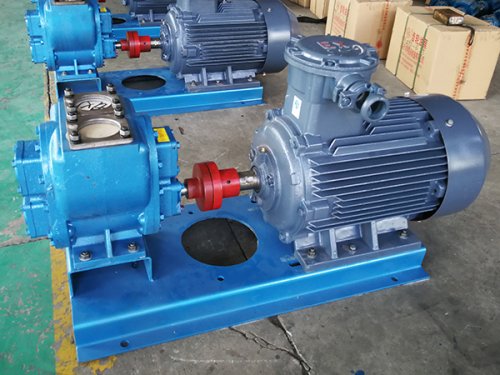
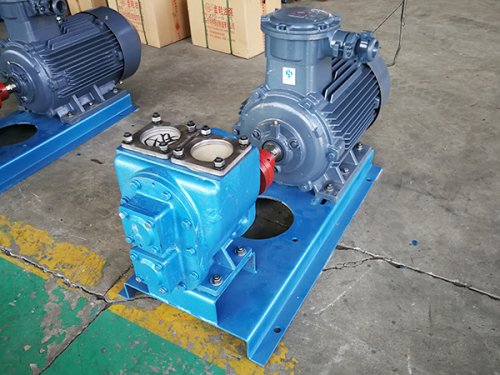
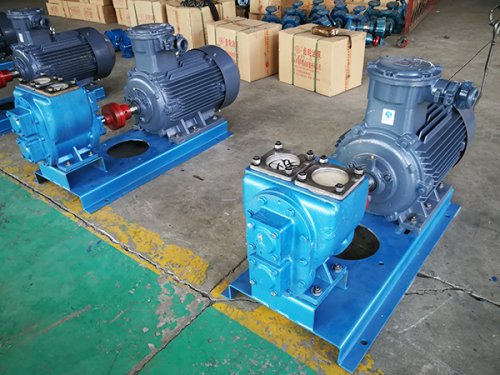
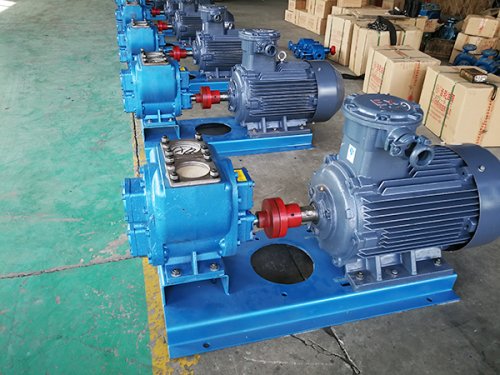
The BRY centrifugal hot oil pump, as the core equipment for high-temperature medium transportation areas, is widely used in industries such as petrochemicals, textile printing and dyeing, rubber and plastics. Its operational stability directly affects production continuity, while the conservative operation and maintenance mode relies on manual inspection and regular maintenance, which leads to problems such as delayed fault detection and significant downtime losses. By integrating fault warning technology with remote operation and maintenance methods, real-time perception and active maintenance of equipment health status can be achieved, significantly improving systematicity.
1、 Construction of Fault Warning Technology System
1. Multi dimensional monitoring signal fusion
The fault warning of BRY type hot oil pump needs to integrate multiple parameter signals such as vibration, temperature, and pressure. Vibration monitoring can capture mechanical fault characteristics such as rotor imbalance and bearing wear. For example, damage to the outer ring of the bearing can generate fault frequency components in the envelope spectrum; Temperature monitoring can reflect seal failure or lubrication abnormalities. When the dynamic and static rings of the mechanical seal wear out, the temperature of the sealing chamber will increase abnormally; Pressure monitoring can identify pipeline blockages or cavitation phenomena, and periodic fluctuations in pump inlet and outlet pressure occur when cavitation occurs. By deploying acceleration sensors at the pump drive end, non drive end, and motor end, installing temperature probes in the sealed chamber and bearing seat, and installing pressure transmitters in the inlet and outlet pipelines, a monitoring network covering mechanical, thermal, and fluid states can be constructed.
2. Fault feature extraction based on mechanism model
Establish rotor dynamics model and fluid thermodynamics model based on the structural characteristics and failure modes of the hot oil pump. The rotor model can analyze the vibration phase characteristics caused by faults such as misalignment and imbalance, for example, shaft misalignment can lead to prominent second harmonic components of the rotational frequency; The fluid model can simulate the pressure pulsation law during cavitation, and the frequency of pressure fluctuations at the pump inlet and outlet in the early stage of cavitation is related to the number of impeller blades. Obtain the sensitive parameter threshold of faults through simulation calculation, providing theoretical basis for actual monitoring. For example, a petrochemical company found through comparing simulation and measured data that the occurrence rate of bearing failures significantly increases when the vibration acceleration value of the bearing exceeds the set threshold.
3. Intelligent diagnostic algorithm
Constructing a diagnostic model using a combination of deep learning and systems. Learning algorithms can automatically extract complex features from monitoring signals, such as convolutional neural networks (CNN) that can identify the impact components in the vibration time-domain waveform and determine whether there is a bearing cage fracture; Long Short Term Memory (LSTM) networks can analyze the long-term dependencies of temperature sequences and predict the development trend of seal leaks. The system builds a rule base based on Fault Tree Analysis (FTA), combines algorithm outputs with regional knowledge, and provides later diagnostic conclusions. For example, when there are high-frequency harmonics in the vibration spectrum and temperature anomalies, the system can comprehensively determine a composite fault of impeller cavitation and bearing damage.
2、 Implementation path of remote operation and maintenance technology
1. edge computing and cloud collaborative architecture
Edge computing nodes are deployed at the pump station to realize data pre-processing and real-time early warning. Edge nodes can perform filtering, feature extraction, and other operations on the original monitoring signals to reduce data transmission, while running lightweight diagnostic models to complete primary fault diagnosis locally. For example, when the vibration acceleration exceeds the alarm threshold of one layer, the edge node immediately triggers a local sound and light alarm and uploads abnormal data to the cloud. The cloud platform integrates big data analysis and complex models to aggregate and analyze data from multiple pumping stations, mine equipment degradation patterns, and optimize maintenance strategies.
2. Digital Twin and Virtual Operations
Build a digital twin of BRY type hot oil pump, and achieve equipment status visualization and operation and maintenance decision simulation through real-time data-driven model updates. Digital twins can simulate equipment response under different operating conditions, such as predicting changes in pump shaft bearing force when adjusting the opening of inlet and outlet valves, to avoid malfunctions caused by improper operation. At the same time, utilizing digital twins for maintenance plan verification, such as analyzing the compatibility between new bearings and shaft systems through virtual assembly before replacing bearings, can reduce on-site debugging time.
3. Mobile operations and knowledge sharing
Mobile operation and maintenance application, realizing functions such as fault work order push, maintenance guidance, and knowledge base query. When a fault is detected by an edge node or cloud platform, the system automatically generates a work order containing the location, severity, and handling suggestions of the fault, and pushes it to the relevant personnel's mobile terminals. Maintenance personnel can use the application to view equipment historical data, similar fault cases, and 3D maintenance manuals to improve on-site disposal speed. For example, when dealing with seal leaks, the application can display an exploded diagram of the seal structure and label key disassembly steps and torque parameters.
3、 Technical application effects and prospects
After applying the above technology in a certain chemical enterprise, the average trouble free operation time of BRY type hot oil pump was significantly improved, and the number of unplanned shutdowns was greatly reduced. The accuracy of fault warning is relatively good, the utilization rate of maintenance resources is significantly improved, and maintenance costs are reduced. In the future, with the development of 5G, industrial Internet and other technologies, the remote operation and maintenance of hot oil pumps will evolve towards predictive maintenance and independent operation and maintenance, providing more equipment determination for industrial production through more accurate state perception and more intelligent decision support.