
Current location: ENGLISh > NEWS > Company News >
Operating Specification for Preheating, Lubrication, and System Exhaust of Cyclo
time:2026-01-21 12:00:25 author:特种泵阀 click:109
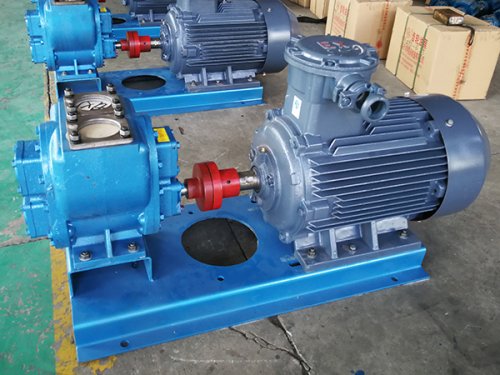
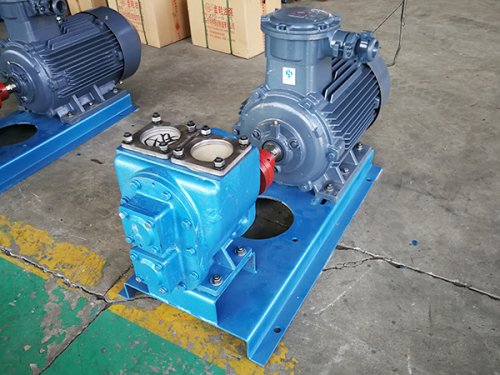
As a precision fluid transmission equipment, the preheating, lubrication, and system exhaust operations of the cycloidal internal gear pump directly affect the service life and operational stability of the equipment. Standardized operating procedures have been developed from five aspects: preparation before operation, preheating implementation, lubrication management, system exhaust, and subsequent inspection. Each step meets the process requirements.
1、 Preparation before operation: Environmental and tool verification
1. Confirmation of environmental conditions
The operation site should be kept clean to avoid impurities such as dust and metal shavings from entering the pump body. If the ambient temperature is lower than the allowed low starting temperature of the equipment, the heating device should be turned on in advance to preheat the pump body and the conveying medium. For media that are prone to crystallization or solidification, it is necessary to confirm that the temperature of the medium has risen to a flowing state to prevent the pump body from getting stuck due to high viscosity of the medium during start-up.
2. Preparation of tools and materials
Prepare tools such as lubricating oil, cleaning cloth, wrench, sealant, pressure gauge, and exhaust valve. Lubricating oil should be selected with a model that matches the equipment requirements, and it is strictly prohibited to mix different viscosities or oils. If it is necessary to replace the lubricating oil, it is necessary to prepare oil drums, oil receiving trays, and oil filtering equipment in advance. A transparent hose should be prepared for exhaust operation to observe the flow state of the medium.
3. Stable protective measures
Operators need to wear protective clothing, gloves, and goggles to avoid splashing of high-temperature media or lubricating oil. If the pump body is connected to a high-pressure system, it is necessary to confirm that the system pressure has been released to a stable range before operation, and hang a "Do Not Start" warning sign. For flammable media, fire extinguishing equipment should be equipped and ventilation should be ensured.
2、 Preheating implementation: staged heating and uniform heating
1. Preheating of pump body
If the pump body is not used for a long time or the ambient temperature is low, preheating treatment is required. Preheating methods are divided into two types: external heating and medium circulation heating. External heating can be achieved by wrapping the pump body with a heating belt, or by evenly baking the pump body shell with a hot air gun. During baking, a distance should be maintained to avoid local overheating; For medium circulation heating, it is necessary to first inject preheated medium into the system and gradually increase the temperature of the pump body through low-speed operation. During the preheating process, it is necessary to continuously monitor the temperature of the pump body to avoid excessive temperature differences that may cause thermal stress deformation.
2. Medium temperature control
The temperature of the conveying medium needs to be controlled within the correct range. For high-temperature media, it is necessary to confirm whether the pump body material is not afraid of temperature and whether the temperature rating matches; For low-temperature media, it is necessary to prevent the medium from crystallizing or solidifying inside the pump body. During preheating, the temperature of the medium can be monitored in real time through a temperature sensor. If the temperature rises slowly, the heating power can be appropriately increased or the circulation flow rate can be increased.
3、 Lubrication management: oil level inspection and oil replacement
1. Initial lubrication
Newly installed or overhauled cycloidal internal gear pumps require initial lubrication. Open the oil filling hole on the top of the pump body and slowly inject lubricating oil to the upper limit marked on the oil dipstick to avoid oil overflow. During the injection process, the pump body needs to be tilted to allow sufficient lubricating oil to fill the gear meshing area. After the initial lubrication is completed, it is necessary to manually rotate the pump shaft several times to check whether the gear rotation is flexible, without any jamming or abnormal noise.
2. Lubrication and maintenance during operation
Regularly check the oil level on the dipstick, and if the oil level is below the lower limit, replenish it in a timely manner. Lubricating oil needs to be replaced regularly. Before replacement, the old oil should be drained and the inside of the pump body should be flushed with clean oil. When replacing, it is necessary to simultaneously check the wear of oil seals, bearings, and other components. If the oil seal is found to be aging or the bearing clearance is too large, it should be replaced immediately. For high-temperature working conditions, it is necessary to shorten the lubricating oil replacement cycle to prevent oil oxidation and deterioration.
4、 System exhaust: step-by-step operation and status confirmation
1. Open the exhaust valve
Connect a transparent hose at the high point of the inlet and outlet pipelines of the pump body or at the exhaust valve on the top of the pump body, and place the other end of the hose into the oil receiving container. Slowly open the exhaust valve to allow the gas in the system to be discharged through the hose. During the exhaust process, it is necessary to observe the flow state of the medium inside the hose. If the medium continuously flows out without bubbles, it indicates that the gas has been exhausted.
2. Exhaust at low speed operation
Before starting the pump body, it is necessary to confirm that the exhaust valve is closed, and then operate the pump body at low speed to collect residual gas at the exhaust valve position using centrifugal force. After running for a period of time, open the exhaust valve again and repeat the above operation until all gas is discharged. For high-pressure systems, exhaust should be completed under low-pressure conditions, and then gradually increased to the working pressure.
5、 Subsequent inspection and recording: full process traceability
1. Monitoring of operating parameters
After the exhaust is completed, it is necessary to monitor the operating parameters of the pump body, including inlet and outlet pressure, flow rate, vibration value, and bearing temperature. If the parameters are abnormal, the machine should be stopped immediately for inspection to determine if the malfunction is caused by incomplete gas discharge or insufficient lubrication.
2. Archive operation records
Detailed records of preheating time, lubricant type and replacement cycle, exhaust operation steps, and measures for handling abnormal situations. The record needs to be signed and confirmed by the operator, and archived for future reference, providing a reference for subsequent maintenance.
Through the above standardized operating procedures, the preheating, lubrication, and system exhaust processes of the cycloidal internal gear pump can be managed in a controllable manner, reducing equipment failure rates, extending service life, and providing certainty for the stable operation of the process flow.