
Current location: ENGLISh > NEWS > Company News >
Composition and selection basis of asphalt insulation pump
time:2024-08-29 11:14:31 author:特种泵阀 click:179
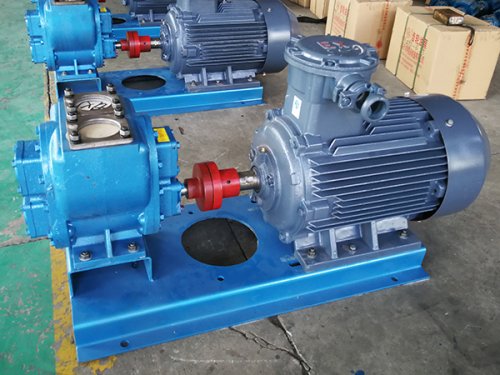
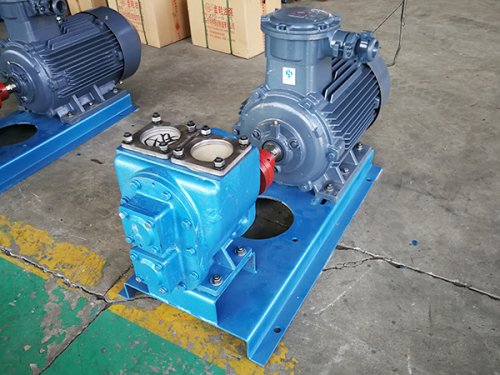
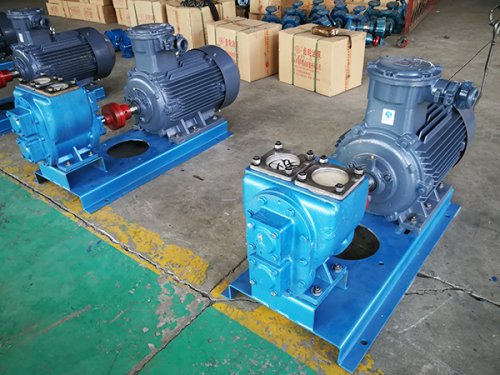
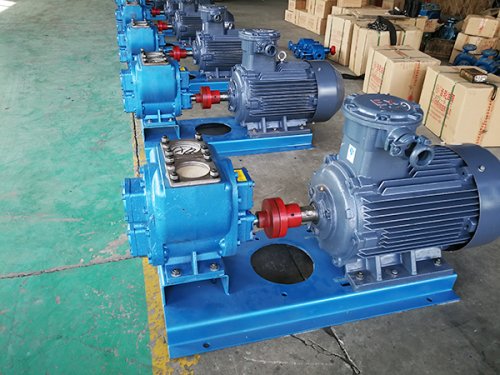
The asphalt insulation pump mainly consists of gears, shafts, pump bodies, pump covers, bearing sleeves, and shaft end seals (magnetic drive and zero leakage structure are required). The gear adopts a double arc sine curve tooth profile. Compared with involute gears, its prominent point is that there is no relative sliding of the tooth profile during the gear meshing process, so the tooth surface is not worn, the operation is smooth, there is no liquid phenomenon, the noise is low, and the service life is good. Asphalt insulation pump is a gear pump made of stainless steel material, specifically a type of asphalt insulation pump with acid resistance and functionality. It is mainly used in low flow, high head water systems, such as drinking water supply systems, pressure boiler water supply systems, highly purified water systems, as well as flushing, spraying and other processes in industries such as medicine, food, chemical, and papermaking.
Asphalt insulation pump is a rotary pump that relies on the change and movement of the working volume formed between the pump cylinder and the meshing gear to transport liquid or increase its pressure. The structure of the external meshing double gear pump. A pair of meshing gears and pump cylinders separate the suction chamber from the discharge chamber. When the gears rotate, the volume between the teeth on the suction chamber side gradually increases, the pressure decreases, and the liquid enters the teeth under the pressure difference. As the gears rotate, the liquid between each tooth is carried to the discharge chamber. At this point, the volume between the teeth at the meshing point of the discharge chamber gradually decreases, and the liquid is discharged.
The asphalt insulation pump is easy to operate and handle, achieving production information management and improving the performance of the automation system. It also has the advantages of easy operation, maintenance, mechanical debugging, and parts replacement.
Basic basis for selecting asphalt insulation pumps
1. The head required for the installation system is another important performance data for pump selection, usually selected by amplifying the head by 5% to more than 10%.
2. The pipeline layout conditions of the device system refer to the liquid delivery height, distance, direction, suction side low liquid level, discharge side high liquid level and other data, as well as pipeline specifications and their length, materials, pipe fittings specifications, quantity, etc., in order to calculate the comb head and verify the cavitation allowance.
3. The properties of liquids include the name, physical properties, chemical properties, and other properties of the liquid medium. Physical properties include temperature, density, viscosity, solid particle diameter, and gas content in the medium, which involve the system's head, cavitation allowance calculation, and appropriate pump type. Chemical properties mainly refer to the chemical corrosiveness and toxicity of the liquid medium, and are important criteria for selecting asphalt insulation pump materials and choosing which type of shaft seal to use.
4. Flow rate is one of the important performance data for selecting asphalt insulation pumps, which directly affects the production and transportation capacity of the entire device. If the process in the hospital can calculate the normal, small, and large flow rates of the pump. When choosing a pump, the high flow rate should be taken as the basis, while considering the normal flow rate. When there is no high flow rate, it is usually recommended to use 1.1 times the normal flow rate as the high flow rate.
5. There are many operating conditions, such as the operation of liquid T, saturation vapor force P, suction side pressure PS, discharge side container pressure PZ, altitude, environmental temperature, whether the operation is intermittent or continuous, and whether the pump position is fixed or movable.
Misunderstandings in the maintenance of mechanical seals for asphalt insulation pumps
During the maintenance of the sealing device of the asphalt insulation pump, due to the lack of maintenance theory and experience of the maintenance personnel, there are often many misunderstandings, which not only affect the improvement of the maintenance level, but also have a relatively adverse impact on the stable production and normal operation of the enterprise. For example, some maintenance personnel believe that tightening the sealing rings of the dynamic and static rings of the asphalt insulation pump will greatly improve the stability performance of the mechanical sealing device; Some people also believe that the greater the compression of the spring of the asphalt insulation pump, the better its sealing performance will be. These erroneous maintenance concepts are often the reasons for poor performance of mechanical seal devices, so attention should be paid to them.
1. The tighter the sealing ring of the moving ring, the better
The sealing ring of the moving ring is not good if it is too tight. Firstly, it exacerbates the wear and tear between the sealing ring and the shaft sleeve; Secondly, it increases the resistance to axial adjustment and movement of the moving ring, making it difficult to make timely adjustments when working conditions change frequently; Thirdly, springs are prone to damage due to excessive fatigue; The fourth is to deform the dynamic sealing ring, which affects the sealing effect.
2. The tighter the static ring seal, the better
The static ring seal is basically in a static state. Excessive deformation of the relatively tight sealing ring affects the sealing effect; The material of the static ring is mostly graphite, which is generally brittle and prone to cracking under excessive stress; Difficulty in installation and disassembly can easily damage the static ring.
3. The greater the compression of the spring, the better the sealing effect
Excessive compression of the spring can cause rapid wear and instant burning of the friction pair; Excessive compression of the spring results in the loss of the ability to adjust the end face of the moving ring, leading to seal failure.
Brief description of mechanical seal for asphalt insulation pump
With the progress of society, environmental protection requirements are becoming increasingly high, and enterprises are paying more attention to environmental protection in their production processes. In chemical enterprises, there are many corrosive media that come into contact with, and it is necessary to avoid leakage problems. Therefore, in the selection process of asphalt insulation pumps, it is required to achieve no leakage in daily production processes. Therefore, currently most asphalt insulation pumps adopt mechanical sealing as the sealing method. The asphalt insulation pump adopts a mechanical sealing structure, which has better sealing performance compared to packing sealing. It consumes less power and has a longer online use time. Due to the buffer spring, it has good buffering performance and is widely used. Compared with packing seals, it has a complex structure, strict processing accuracy and installation requirements, and high requirements for the quality and technical level of installation personnel. Therefore, identifying the cause of mechanical seal leakage and solving it has practical significance, which can enhance the service life of the mechanical seal online.
Mechanical seal, also known as end face seal, is a sealing device composed of one or more pairs of dynamic and static ring contact surfaces perpendicular to the pump shaft. Under the combined action of medium pressure and compensating spring force inside the pump, they maintain contact and rotate relative to each other to prevent liquid leakage from the contact surfaces. Mainly used for sealing the rotating shafts of pumps, compressors, hydraulic transmissions, and other similar equipment. Its main function is to transform the easily leaking axial seal into a more difficult to leak end face mechanical seal. During the working process, a thin liquid film is formed between the dynamic and static rings, which not only serves as a sealing medium, but also provides lubrication and reduces the wear of the friction pair.