
Current location:ENGLISh > PRODUCT > rotary pump >
LC rotary pump
15833379552
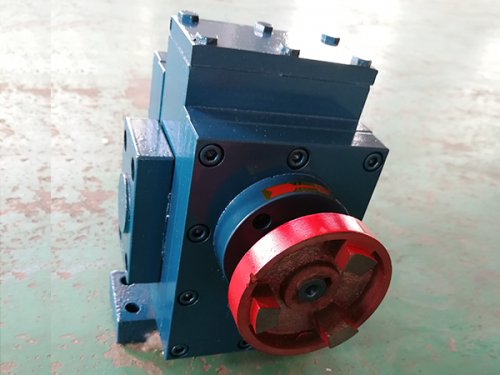
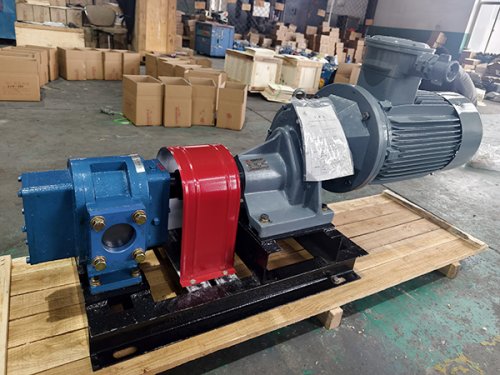
LC rotary pump (LC Roots rotary pump) is a volumetric rotary conveying equipment that relies on a pair of synchronous gears to drive the two rotors in the pump chamber to rotate synchronously in opposite directions. Unlike ordinary gear pumps, it operates at low speeds and is suitable for conveying media with a wide viscosity range. It is divided into two structures: reducer direct transmission and pulley transmission. It can be customized with jacket insulation models, stainless steel sanitary models and drive configurations. It is applied in petroleum storage and transportation, asphalt mixing stations, grain and oil processing, daily chemical industry, and coating industry. It is suitable for tank unloading, furnace oil supply, and material circulation transportation. It can operate continuously for a long time and also supports intermittent start stop operations.
The entire unit consists of a pump body, front and rear pump covers, parallel drive shafts, synchronous gears, two/three blade rotors, shaft end sealing components, and a base to form a conveying unit. A gap is reserved between the rotor and the pump casing, and the rotors do not touch each other during operation. They rely on synchronous gear meshing, resulting in low friction loss and use. The pump body can be equipped with a surrounding insulation layer, which allows steam and thermal oil to circulate for heating, avoiding the low-temperature solidification of heavy oil and resin. The materials for overcurrent components can be cast iron or 304/316 stainless steel; Transporting lightweight flammable and explosive oil products can replace copper rotors to reduce the risk of sparks. The shaft end is equipped with a return oil structure to prevent air intake and medium leakage.
After the equipment is started, the synchronous gear drives the two rotors to rotate at a constant speed in reverse, and the volume of the suction chamber continues to expand, forming negative pressure, and the medium is sucked into the rotor chamber; The rotor carries the medium along the inner wall of the pump casing and transports it to the discharge chamber. The volume of the chamber shrinks to achieve the pressurized discharge of the medium, and the suction and conveying processes continue to circulate. The pump has self-priming performance and can sustain self-priming after the initial infusion; Support forward and reverse switching, exchange of import and export functions, convenient for oil tanker loading and unloading operations. The flow rate is proportional to the speed, and can be adjusted with a variable frequency motor to regulate the conveying capacity. Under high viscosity conditions, the flow rate attenuation amplitude is small, and the conveying stability is better than that of a centrifugal pump.
The pump body can be equipped with an external overflow valve to achieve overload protection. When the outlet pipeline is blocked or the valve is closed, causing pressure buildup, the medium will flow back and release pressure, protecting the pump body and pipeline accessories. The internal flow channel of the pump chamber is open and has no narrow dead corners, making it difficult for viscous materials to accumulate and scale; Easy to rinse and clean after shutdown. The equipment itself does not have a built-in valve, and it is recommended to provide an independent overflow pipeline for high-pressure conditions.
Packing seals and hard alloy mechanical seals can be selected for sealing matching according to working conditions. Select ordinary oil resistant seals for transporting ambient temperature oil products; Fluorine rubber sealing components are selected for high-temperature and weakly corrosive media. Sealing and disassembly are simple, without the need for complete machine disassembly. Simply remove the pump cover to complete the replacement and shorten the downtime of the production line. The conventional applicable medium temperature is ≤ 140 ℃, and the insulation model can meet the transportation needs of high-temperature viscous media.
At the medium adaptation level, LC rotary pumps are suitable for conveying liquid and paste like media that do not contain hard and sharp particles and have fluidity. They are suitable for materials with a kinematic viscosity of 5-10000mm ²/s, including diesel, heavy oil, crude oil, asphalt, lubricants, syrups, sauces, paints, adhesives, and other categories. Cast iron models are commonly used for industrial fuel and asphalt transportation; Stainless steel models are suitable for grain, oil, food, and daily chemical raw materials. The equipment is not suitable for conveying scenarios involving strong corrosion, strong acid, and large amounts of hard particle slurry.
In terms of installation and matching, the horizontal base of the whole machine is reserved with standard anchor holes, and the flange inlet and outlet interfaces are convenient for connecting hard and soft pipes. The power end is equipped with an elastic coupling or pulley transmission, and the coaxiality is calibrated during assembly to reduce vibration wear. It is recommended to install a pre filter in the suction pipeline to intercept impurities and prevent rotor collision and damage; All pipeline joints are equipped with sealing gaskets, and air intake affects the self-priming effect. Before starting, the medium should be retained in the pump chamber, and prolonged idling is prohibited to cause dry wear of the seal; The insulation machine transports solidified media and preheats the pump body before starting up.
At the level of daily maintenance operations, the pump body adopts modular assembly, and the rotor, synchronous gear, and seal can be disassembled separately. Ordinary general tools can be used to complete maintenance. Regularly check the oil level and quality of the synchronous gear lubricating oil, and replace the lubricating oil on time; Observe the gap between the rotor and the pump casing. An increase in gap will cause a decrease in flow rate and pressure. Repair and adjust as needed. After each delivery of viscous materials, clean medium is circulated to flush the pump chamber to prevent the medium from drying up and sticking to the rotor. Long term shutdown to empty internal residual materials and take measures to prevent rust.
During long-term use, we adhere to pre filtration, standardized start stop, and regular maintenance, resulting in a lower overall failure rate. Low speed operation reduces wear and tear, and comprehensive operation and maintenance costs are controllable; The self-priming ability and bidirectional conveying characteristics are very suitable for working conditions such as oil tanker loading and unloading, fuel transfer, and heavy oil supply in mixing stations.
Overall, LC rotary pumps rely on synchronous gear non-contact rotor structure, self-priming ability, optional jacket insulation, stainless steel, and configuration, suitable for conveying high and low viscosity oil and paste materials, with stable flow and support for bidirectional operation. They are applied in asphalt mixing stations, petroleum storage and transportation, grain and oil, and chemical production line medium transportation, meeting the long-term continuous transportation needs of materials.