
Current location:ENGLISh > PRODUCT > Ordinary gear pump >
gear pump
15833379552
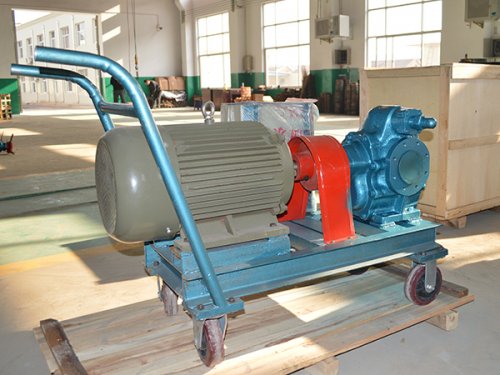
Gear pumps belong to positive displacement conveying equipment, which rely on a pair of interlocking driving gears and driven gears to operate synchronously, and use the alternating volume changes between the tooth cavities to complete the suction and discharge of liquid media. The equipment is commonly arranged horizontally and can operate continuously for a long time or intermittently, suitable for industrial fluid transportation scenarios.
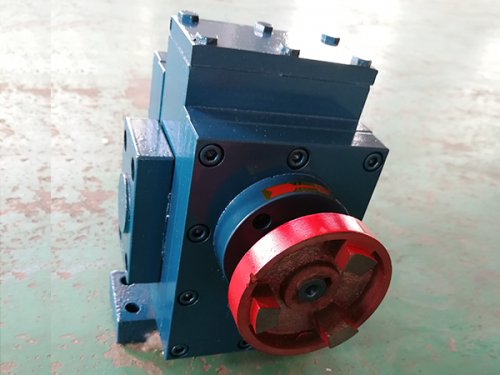
The main components of the equipment include the pump body, pump cover, driving shaft, driven shaft, gears, bearings, and shaft end sealing components. Gears undergo heat treatment processing to improve meshing accuracy. A pressure balance channel is installed inside the pump chamber to reduce the axial force generated during operation and minimize component wear. The shell material can be selected as needed, such as cast iron, stainless steel, etc; Insulation jacket can be installed for conveying easily solidified media; If there is a working condition requirement, copper gears can be selected. Moving parts rely on self-lubricating transport media and do not require additional independent lubrication systems.
The power drives the driving gear to rotate through the coupling, and the driven gear rotates in the opposite direction. The gear disengages from the meshing area, and the cavity volume increases to form negative pressure, causing the medium to be sucked into the tooth groove; The medium is transported to the oil pressure area along with the gears, and the gears mesh with each other to compress the chamber volume. The medium is compressed and transported outward, achieving continuous feeding through circulation. The flow rate and speed have a linear relationship, and when combined with a speed control device, the conveying capacity can be adjusted. The equipment has basic self-priming ability and can be started and stopped multiple times after the initial injection of the medium.
Some models are equipped with built-in overflow structures. When the pipeline is blocked or the valve is closed, causing abnormal pressure, the medium can flow back and release pressure inside the pump, reducing the damage caused by high pressure. This structure is only used for emergency protection and cannot be used for long-term voltage stabilization operations. If there is a need for constant pressure, an external pressure regulating pipeline can be connected. The internal flow channel of the pump chamber is unobstructed, with fewer dead corners, making it easy to rinse and clean.
The sealing scheme can be combined with the temperature and degree of corrosion of the medium to select packing seals, mechanical seals, and other forms. The whole machine adopts a split assembly structure. During maintenance, the pump cover can be removed to replace the seals and check the gear status, without the need to remove all pipelines. The insulated pump body can adapt to the transportation of viscous, low-temperature and easily solidified media.
Suitable for conveying fluid liquids without hard particles and fiber impurities, with a medium viscosity range of 5-1500mm ²/s. It can transport fuel, lubricating oil, vegetable oil, and weakly corrosive liquid raw materials. Not suitable for strongly corrosive media and materials containing a large amount of solid particles.
The equipment is fixed by the base, with standard installation holes reserved, and flange interfaces adapted to general industrial pipelines. The installation of couplings requires correction of coaxiality to reduce vibration wear. It is recommended to install a filtering device in the suction pipeline to prevent impurities from entering the pump chamber. Before starting, the medium should be retained in the pump chamber, and it is forbidden to run idle for a long time. The pump body with insulation structure can be preheated before transporting easily solidified materials.
Daily maintenance includes cleaning filters, checking for seal leaks, monitoring operating temperature rise and vibration. After conveying viscous materials, use a clean medium to circulate and rinse the chamber to avoid material drying and adhesion. Long term shutdown requires emptying the residual medium inside to reduce the risk of corrosion and solidification.
The equipment components have good universality, operate smoothly, and have moderate maintenance difficulty. They are applied to material transfer, furnace front oil supply, lubrication oil supply, and other working conditions.