
Current location:ENGLISh > PRODUCT > Light and heavy fuel booster pump >
High and low viscosity fuel booster pump
15833379552
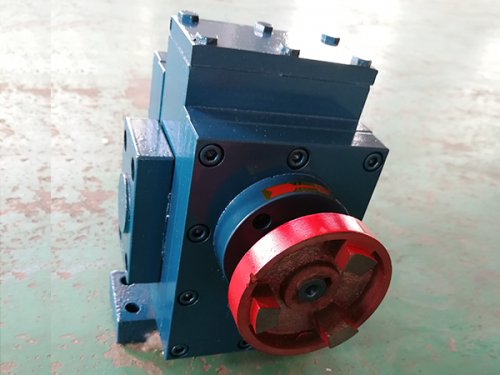
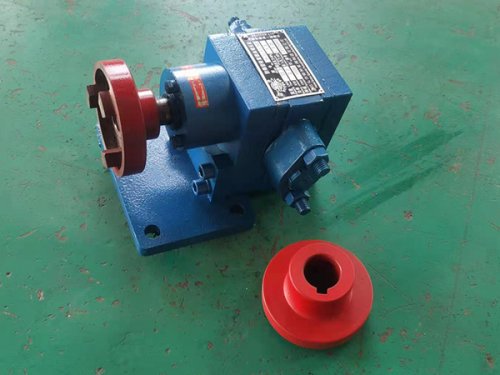
High and low viscosity fuel booster pump is a volumetric boosting and conveying component for industrial fuel supply systems, which can adapt to the transportation needs of fuel media with large viscosity spans. It can transport low viscosity light diesel, as well as high viscosity heavy oil and fuel oil. It can be selected from ordinary room temperature or jacket insulation structures according to the on-site working conditions, and is matched with asphalt mixing stations, industrial boilers, and incineration device burner boosting and oil supply systems. It is also suitable for fuel tank transportation, fuel pre-treatment and transportation processes. The whole machine can achieve all-weather continuous pressurized oil supply, and can also follow the start stop of the production line to perform intermittent oil supply operations.
The entire unit consists of a pump body, front and rear pump covers, heat-treated alloy master and slave gears, quenched and tempered transmission shaft, floating thrust plate, shaft end sealing component, and built-in reflux valve to form a conveying unit. The gears have undergone chemical treatment and possess anti erosion performance, which can cope with the working conditions of trace gum impurities inside the fuel; Multi channel axial force balance flow channels are arranged inside the cavity to counteract the unidirectional axial thrust generated by gear rotation under pressurization conditions, reduce unilateral wear of the thrust plate, and ensure stable and low vibration amplitude during long-term pressurization operation. The internal moving components rely on the delivery of fuel to achieve self lubrication, without the need for additional independent lubrication oil circuits, simplifying the on-site pipeline layout. In response to the low temperature and easy solidification characteristics of high viscosity fuel, the insulation style pump body and pump cover are integrated with a surrounding insulation layer, which can be continuously heated by steam and heat transfer oil to prevent the medium from cooling and blocking the gears after shutdown. Some models are equipped with end face clearance fine adjustment structures. After long-term operation pressure attenuation, it is not necessary to disassemble the pump body as a whole to adjust the fitting clearance and restore the rated boosting capacity.
After the device is connected to the driving power, the motor drives the gear to rotate synchronously and uniformly through an elastic coupling. The gear teeth disengage and the cavity volume continues to expand, forming negative pressure. The fuel inside the storage tank is filled into the gap between the gear teeth through a widened and smooth oil inlet channel. As the gears continue to rotate, the grooves carry the medium to the oil pressure area, and the gears re engage with the compression chamber volume. The fuel forms a stable pressure and is transported to the burner pipeline. The entire process of suction, transfer, pressurization, and discharge runs continuously. The pump body adopts a smooth flow channel without dead corners, which meets the requirements of low viscosity medium circulation and high viscosity medium transportation. The flow pulsation amplitude is small, and the fuel supply pressure of the burner remains stable, and the fuel is fully atomized and burned.
The pump body is integrated with a built-in reflux valve, which is responsible for short-term overload protection and has a preset opening pressure at the factory. When the outlet pipeline is blocked, the valve is closed, and the pressure inside the chamber exceeds the rated range, the valve automatically opens, and some medium flows back to the oil suction chamber to release high pressure, reducing the damage of pressure impact to the pump body, fuel pipeline, and burner nozzle. This structure is only suitable for temporary protection in case of sudden blockage and cannot be used as a stabilizing device for a long time. If the working conditions require stabilizing control, independent pressure regulating accessories can be installed in the external pipeline to work together. The inner wall of the pump body has been smoothed to reduce the adhesion and accumulation of gum and carbon deposits, and to alleviate the problem of decreased volumetric efficiency caused by long-term operation. The equipment has basic self-priming ability, and only a small amount of medium needs to be pre filled into the cavity for initial startup, simplifying the startup operation process.
The sealing matching can be selected based on the viscosity of the medium and operating temperature, using either packing seal or hard alloy mechanical seal. Select anti swelling sealing accessories for low viscosity diesel transportation conditions; Select sealing components for high-temperature and high viscosity heavy oil operating conditions. The sealing component tightly fits the gap between the transmission shaft and the pump cover, reducing the risk of fuel leakage, while blocking dust and water vapor from entering the cavity to prevent hard impurities from scratching the gear tooth surface. The disassembly and assembly process of sealing accessories has been optimized, and daily maintenance does not require the overall disassembly of the pump body. Only the outer pump cover can be replaced, shortening the downtime of the heating production line. The temperature of the conventional sealing medium should not exceed 200 ℃, and special sealing components can be upgraded for continuous high temperature conditions.
At the medium adaptation level, this series of booster pumps is suitable for transporting fuel media that do not contain hard metal particles, long fiber impurities, and have lubricating properties. The medium's kinematic viscosity covers 5 to 1500mm ²/s, and is suitable for high and low viscosity fuel categories such as light diesel, heavy diesel, and fuel oil. The cast iron model is suitable for clean and low viscosity fuel transportation; Steel casting insulation models are preferred for transporting high viscosity heavy oil; Paired with motor units, it can meet the oil supply needs of mixing stations and chemical workshops. The equipment is not suitable for transporting highly corrosive and volatile media with flash points. Metal components in contact with the medium have undergone rust prevention treatment, making them suitable for outdoor dusty and temperature sensitive working environments such as boiler rooms and asphalt mixing stations.
In terms of installation and matching, the horizontal base of the whole machine is reserved with standard anchor fixing holes, and the installation is stable on the ground. The inlet and outlet can be flexibly adjusted according to the layout of the fuel pipeline, and the large-diameter interface reduces the resistance of medium transportation. The power end is equipped with an elastic coupling, and the coaxiality is calibrated during the assembly process to buffer the hydraulic impact generated by the boost working condition and reduce unilateral wear of the transmission shaft. Install a large area pre filter on the suction pipeline, with a flow area larger than the cross-sectional area of the inlet pipe, to intercept impurities from the bottom of the storage tank and prevent damage to the gear tooth surface; All pipeline joints are equipped with oil resistant sealing gaskets to prevent air from infiltrating the chamber and causing fluctuations in oil supply pressure. Before starting, check that the motor direction is consistent with the pump body identification; When transporting high viscosity fuel with insulation models, priority should be given to preheating the pump body with a heat source. It is prohibited to forcibly start the pump when the medium is solidified, and it is also strictly prohibited to fully close the outlet valve and operate it under pressure for a long time.
At the level of daily maintenance operations, the pump body adopts modular assembly, and the alloy gear, thrust plate, seal, and pump cover can be separated and removed separately. General and simple tools can be used to complete the disassembly, making it easy to regularly clean the carbon deposits and gum impurities inside the cavity, and check the wear status of the gear and thrust plate. The meshing force of the gears is balanced, and the overall vibration amplitude of the machine is low. With the use of shock-absorbing gaskets, the operating noise is controllable, and it is suitable for the uninterrupted boosting and oil supply mode of the production line throughout the day. Maintaining the cleanliness of the inlet filter on a daily basis, regularly checking for seal leakage, controlling the temperature range of the medium, avoiding long-term overload operation of the equipment, and adjusting the end face clearance as needed when the pressure drops can extend the service life of gears and sealing accessories and reduce the frequency of unplanned shutdowns on the production line. After a long-term shutdown, the insulation machine continues to maintain the temperature of the chamber while emptying the residual high viscosity fuel in the pump to prevent the medium from cooling, solidifying, and jamming the gear components.
During long-term use, the equipment failure rate is relatively low. As long as we adhere to media pre filtration, regular quarterly inspections, and standardized start stop operations, the core components can maintain stable pressure boosting and oil supply conditions for a long time. There are no large areas of dead corners in the internal flow channel. After shutdown, a clean fuel circulation flushing chamber is introduced to reduce the problems of insufficient boost and flow decline caused by the accumulation of gum carbon, reduce the frequency of disassembly and cleaning of the whole machine, and ensure the stable operation of the entire fuel combustion system.
Overall, the high and low viscosity fuel booster pump relies on alloy gears, optional jacket insulation and gap fine adjustment structure, built-in overload valve, and is suitable for the wide viscosity range of high and low viscosity fuel transportation needs. The booster output is stable, and it is suitable for asphalt mixing stations and industrial boiler burner fuel boosting and oil supply conditions. It can meet the basic needs of long-term continuous and stable pressure fuel boosting and transportation in production lines.