
Current location:ENGLISh > PRODUCT > Light and heavy fuel booster pump >
Light and heavy fuel booster pump
15833379552
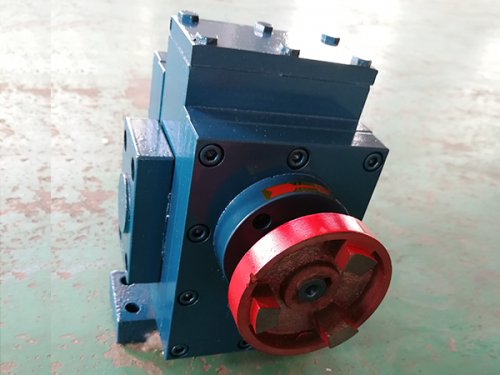
The light and heavy fuel booster pump is a volumetric boosting and conveying equipment designed for the fuel supply conditions in front of industrial combustion furnaces. It can adapt to the switching and conveying of low viscosity light diesel oil and medium high viscosity fuel oil. It is divided into normal temperature models and jacket insulation models, and the driving scheme is optional. Applied to asphalt mixing stations, industrial boilers, heating furnaces, and combustion equipment burners for pressurized fuel supply, while also undertaking the transfer of media between fuel storage tanks and the pre-treatment and transportation of fuel. The equipment supports long-term continuous pressurized fuel supply and can also be used in conjunction with production line start stop to achieve intermittent fuel supply operations.
The entire unit consists of a pump body, front and rear pump covers, heat-treated alloy master and slave gears, quenched and tempered transmission shaft, floating thrust plate, shaft end sealing component, and built-in reflux valve to form a conveying unit. The gears have undergone surface hardening treatment, are resistant to erosion, and can withstand a small amount of gum impurities in fuel; A multi-channel axial force balance flow channel is installed inside the cavity to counteract the unidirectional axial thrust generated by the boosting operation, reduce the wear of the thrust plate on one side, and achieve long-term continuous operation with low vibration and smooth operation. The internal moving parts rely on fuel medium for self lubrication, without the need for additional independent lubrication oil circuits, simplifying the on-site pipeline layout. The working condition for transporting heavy oil can be selected as an insulation type. The pump body and pump cover are integrated with an insulation layer, and steam or thermal oil is introduced for heating to avoid gear jamming caused by the cooling and solidification of heavy oil during shutdown. Some models are equipped with gap fine-tuning structures, which can restore boost performance without disassembling the entire machine after pressure attenuation.
After the equipment is powered on, the motor drives the gears to rotate synchronously through an elastic coupling. The cavity volume on the side where the gears disengage expands to form negative pressure. The fuel in the storage tank enters the gear teeth groove through a widened smooth oil inlet channel. As the gears continue to rotate, the medium is transported to the oil pressure area, and the gears mesh to compress the volume of the chamber. The fuel forms a stable pressure and is transported to the burner pipeline, where the suction, transportation, pressurization, and discharge cycles continue. The pump body adopts a blind spot free flow channel, which takes into account the requirements of light diesel oil circulation and high viscosity heavy oil transportation. The flow pulsation is small, the fuel supply pressure of the burner is stable, and it helps the fuel to fully atomize and burn.
The pump body is integrated with a built-in reflux valve, which provides short-term overload protection and preset opening pressure at the factory. When the outlet pipeline is blocked, the valve is closed, and the pressure inside the chamber exceeds the rated value, the valve automatically opens, and some medium flows back to the oil suction chamber to release pressure, reducing the damage of high-pressure impact to the pump body, pipeline, and combustion nozzle. This structure is only used for emergency protection against sudden blockages and cannot be used as a long-term stabilizing device; If the working conditions require voltage stabilization, independent pressure regulating accessories can be installed in the external pipeline for use. The inner wall of the pump body has been smoothed to reduce carbon deposition and gum adhesion, thus delaying the problem of flow rate decline caused by long-term operation. The equipment has basic self-priming ability and can work normally with a small amount of pre filled medium upon initial start-up.
The sealing configuration can be selected based on the temperature of the medium and the viscosity of the oil, using either packing seals or hard alloy mechanical seals. Select anti swelling sealing accessories for diesel transportation; Select sealing components for high-temperature heavy oil operating conditions. The seal tightly fits the gap between the transmission shaft and the pump cover, reducing the risk of fuel leakage under high pressure, while blocking dust and water vapor from entering the pump chamber, preventing hard impurities from scratching the gear tooth surface. Modular components, maintenance does not require dismantling the pump body as a whole, only the outer pump cover can be removed to replace the seals, shortening the downtime of the production line. Conventional sealing is suitable for medium temperatures not exceeding 200 ℃, and special sealing components can be upgraded for continuous high temperature conditions.
At the medium adaptation level, this light and heavy fuel booster pump is suitable for delivering fuel media that do not contain hard metal particles, long fiber impurities, and have lubricity. The medium's kinematic viscosity range is 5 to 1500mm ²/s, and it is suitable for industrial fuels such as light diesel, heavy diesel, and fuel oil. Cast iron models are suitable for clean diesel transportation; Steel casting insulation models are preferred for high viscosity heavy oil pressurized transportation; Paired with motors, it can meet the oil supply needs of mixing stations and chemical areas. The equipment is not suitable for conveying strongly corrosive and highly volatile media. The overcurrent metal components have undergone rust prevention treatment and can adapt to industrial sites with high dust and large temperature fluctuations in the open air.
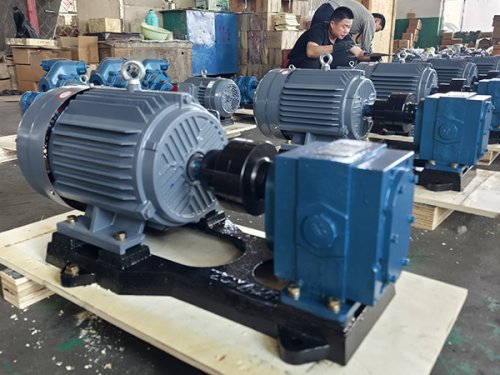
In terms of installation and matching, the horizontal base of the whole machine is reserved with standard anchor holes, which are firmly installed on the ground. The inlet and outlet can be flexibly adjusted according to the direction of the pipeline, and the large-diameter interface reduces the flow resistance of the medium. Install an elastic coupling on the power end, calibrate the coaxiality during installation, buffer hydraulic impact, and reduce unilateral wear of the transmission shaft. Install a pre filter in the suction pipeline, with a flow area larger than the cross-sectional area of the inlet pipe, to intercept impurities from the tank bottom entering the pump chamber; All pipeline joints are equipped with oil resistant sealing gaskets to prevent air infiltration and pressure fluctuations. Confirm that the motor direction is consistent with the markings before starting; The insulation machine needs to preheat the pump body in advance when transporting heavy oil. It is strictly prohibited to forcibly start the pump when the medium is solidified, and it is forbidden to fully close the outlet valve and run under pressure for a long time.
At the level of daily maintenance operations, the pump body adopts modular assembly, and the alloy gear, thrust plate, seal, and pump cover can be disassembled separately with simple and universal tools, making it easy to regularly clean the cavity volume of carbon and resin, and check the wear of the gear and thrust plate. The meshing force of the gears is balanced, the overall vibration amplitude of the machine is low, and the operation noise is moderate when paired with shock-absorbing gaskets, which is suitable for the uninterrupted production mode of the production line. Keep the inlet filter clean on a daily basis, regularly check for seal leakage, control the temperature range of the medium, avoid long-term overload operation, adjust the end face clearance as needed when the pressure drops, extend the service life of gears and seals, and reduce unplanned shutdowns. After long-term shutdown, the insulation machine maintains the temperature of the cavity and empties the residual heavy oil inside to prevent solidification and jamming of the gear components.
During long-term use, the equipment failure rate is relatively low. We adhere to media pre filtration, regular inspections, and standardized start stop, and the core components can maintain stable pressure boosting ability for a long time. There is no large area of dead corner accumulation inside the pump chamber. After shutdown, clean fuel circulation is introduced to flush the chamber. Problems such as insufficient boost and unstable flow caused by carbon and gum accumulation are reduced, reducing the frequency of disassembly and cleaning. The entire fuel combustion system operates stably.
Overall, the light and heavy fuel booster pump relies on alloy gears, optional jacket insulation and gap fine adjustment structure, built-in overload valve, and is suitable for high and low viscosity industrial fuel boosting and transportation, with stable output pressure. It is applied in asphalt mixing stations and industrial boiler burner fuel supply systems, and can meet the long-term continuous and stable pressure boosting and transportation needs of light and heavy fuel on production lines.