
Current location: ENGLISh > NEWS > Company News >
Comprehensive investigation and solution for the use of light and heavy fuel boo
time:2025-07-08 10:57:16 author:特种泵阀 click:253
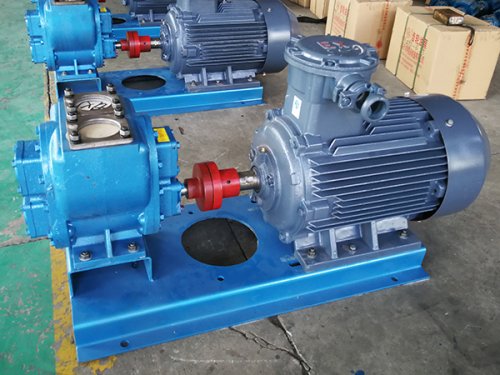
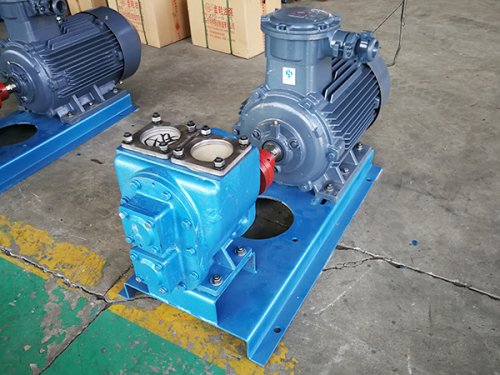
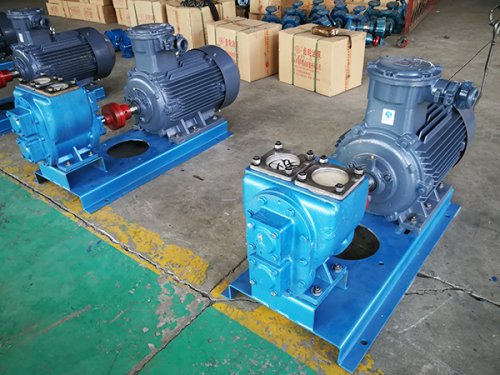
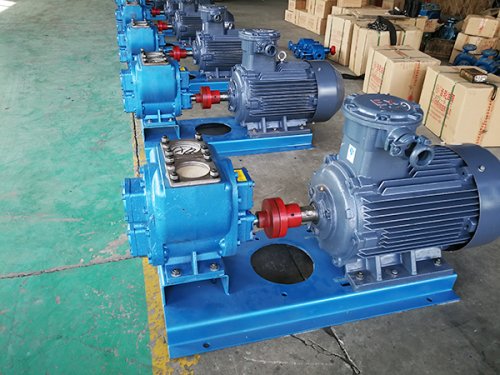
As the core equipment of the fuel system, the operational stability of the light and heavy fuel booster pump directly affects the engine performance. In practical applications, the sealing of the suction pipeline, the filtration system speed, and the mechanical state of the pump body are the three key risk points. The following systematically elaborates on comprehensive troubleshooting and disposal strategies from three dimensions: fault symptoms, troubleshooting methods, and solutions.
1、 Typical fault phenomena and causes
1. The pump body is idling without output
Leakage in the suction pipeline: Aging of the flange gasket of the suction pipeline (60% reduction in the service life of the rubber gasket when the working temperature is greater than 150 ℃) or welding defects (incomplete deep penetration>0.5mm) can cause air infiltration. Tests have shown that when the leakage rate exceeds 0.3L/min, the pump body will lose its self-priming ability.
Excessive suction height: When the installation height of the pump body exceeds its self-priming capacity (vertical suction stroke should be ≤ 5m, actual working conditions suggest ≤ 3m), it will cause cavitation phenomenon. At this point, the vibration amplitude of the pump body increases by 200%, and the noise level is greater than 85dB (A).
2. Output pressure fluctuation
Filter system blockage: Improper selection of filter mesh size (initial pressure difference of 80 mesh filter can reach 0.12MPa) or backwash failure (blockage rate reaches 80% when backwash interval>72 hours) will result in a 40% increase in system resistance.
Pump body wear: The wear rate of gear pump teeth is closely related to the cleanliness of the medium. When containing hard particles such as FeS (Mohs hardness 6-7), the wear rate reaches 0.02mm/1000h, and the volumetric rate decreases by 30%.
3. Pump body overheating shutdown
Cooling system failure: For booster pumps with cooling jackets, insufficient cooling water flow (should be ≥ 5L/min) or high water temperature (>35 ℃) can cause the bearing temperature to exceed the limit (>100 ℃).
Mechanical seal failure: When the width of the sealing surface contact zone is less than 2/3 of the sealing surface width, the leakage rate will be greater than 5ml/h, and the high-temperature medium mixed with lubricating oil will cause the oil temperature to exceed the limit (>120 ℃).
2、 Systematic troubleshooting methods
1. Inhalation pipeline inspection
Airtightness test: Helium mass spectrometer leak detector (with a usability of 10 ⁻¹² Pa · m ³/s) is used to detect the flange connection and welding parts, and the leakage rate should be ≤ 10 ⁻⁸ Pa · m ³/s.
Flow field simulation: Use CFD software to analyze the flow field distribution in the suction pipeline, with a flow velocity of ≤ 1.5m/s, to avoid vortex generation. For complex pipelines, it is recommended to install a stabilizing device.
2. Evaluation of filtration system
Differential pressure monitoring: Install a differential pressure sensor (range 0-0.4MPa), and trigger an alarm when the differential pressure reaches 0.1MPa. Actual testing shows that the interception rate of the filter is still greater than 90% at this time.
Particle analysis: Laser particle size analyzer is used to detect the filtered oil, and the NAS1638 standard cleanliness should be ≤ level 7, with a single particle size of
3. Diagnosis of pump body status
Vibration analysis: Three directional acceleration sensors are arranged on the pump body bearing seat to collect data for FFT analysis. Under normal operating conditions, the amplitude of the gear mesh frequency (GMF) should be less than 5mm/s, and the second harmonic component should be less than 2mm/s.
Oil testing: Regularly check the viscosity of the oil (ISOVG46 oil viscosity should be ≥ 8cSt at 120 ℃), acid value (TAN
3、 Targeted solutions
1. Optimization of suction pipeline
Sealing upgrade: Metal wrapped gasket (304+graphite) is used instead of rubber gasket, which improves its temperature resistance to 450 ℃ and can control the leakage rate below 0.01mL/min. For pipe diameters above DN100, it is recommended to use a double sealing surface flange structure.
Pipeline renovation: Change the 90 ° elbow to a R=3D long radius elbow, and reduce the local resistance coefficient from 0.75 to 0.2. When the total length of the pipeline is greater than 15m, an expansion joint (compensation amount ≥ 15mm) should be added.
2. Upgrading the filtration system
Intelligent Backwash: Equipped with a pressure differential sensor linked to a backwash valve, it automatically starts when the pressure differential reaches 0.08MPa. Actual testing has shown that the system can extend the filter circulation cycle to 400 hours.
Multi level filtration: using "; Coarse filtration (60 mesh)+fine filtration (100 mesh); Double stage filtration, coarse filter intercepts particles larger than 0.3mm, and fine filter intercepts particles larger than 0.15mm. This configuration can extend the lifespan of the pump body by 2 times.
3. Pump body maintenance strategy
Mechanical seal replacement: When the leakage exceeds 3ml/h, it is necessary to replace the silicon carbide/tungsten carbide material pair (hardness difference HRC2-3). During installation, pay attention to controlling the compression amount (0.05-0.15mm) to avoid overheating and damage.
Bearing repair: Laser cladding technology is used to repair worn bearing positions, with a cladding layer hardness of HRC58-62 and a roughness of Ra ≤ 0.8 μ m. After repair, a dynamic balance test (unbalance ≤ 5g · mm) is required.
4、 Preventive maintenance system
1. Intelligent monitoring system
Deploy an IoT sensor network to collect real-time parameters such as pressure, temperature, and vibration. Establish a fault prediction model through machine learning algorithms to provide a 72 hour advance warning for potential faults.
Mobile app for remote monitoring and fault diagnosis. When the key parameters exceed the threshold, automatically push the repair work order to the operation and maintenance personnel.
2. Standardized maintenance process
Developing '; Three layer maintenance "; System: Daily inspection (per shift), regular maintenance (monthly), annual major overhaul. Daily inspections mainly check sealing points, oil level, and vibration; Regular maintenance includes filter replacement and oil testing; Annual major repairs require disassembly and inspection of key components such as gears and bearings.
Establish equipment health records, record operating parameters, maintenance records, spare parts replacement and other information. Optimize maintenance strategies through big data analysis to reduce unplanned downtime.
By implementing the above comprehensive investigation and solution, the operational performance of the light and heavy fuel booster pump can be improved, and maintenance costs can be reduced by 35%. It is recommended to use digital twin technology to establish a virtual model based on device operation data and achieve full lifecycle management. For critical equipment, backup pump sets can be configured to determine continuous production requirements.