
Current location: ENGLISh > NEWS > Company News >
Composition and production of asphalt insulation pump
time:2024-11-25 11:52:28 author:优化 click:176
Asphalt insulation pump is a good pump equipment used for transporting high-temperature and high viscosity asphalt media. Its composition and manufacturing process have a significant impact on the performance, stability, and service life of the pump. The following is a detailed explanation of the composition and production of asphalt insulation pumps:
1、 Composition of asphalt insulation pump
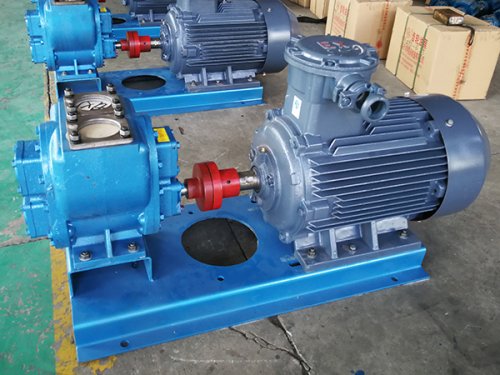
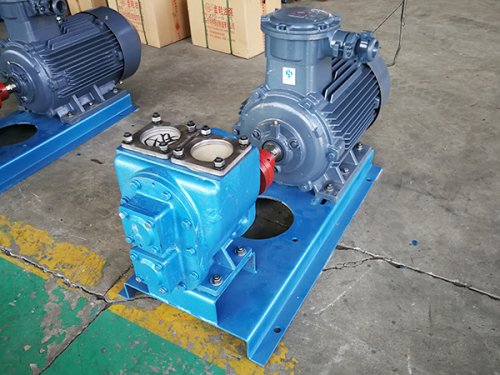
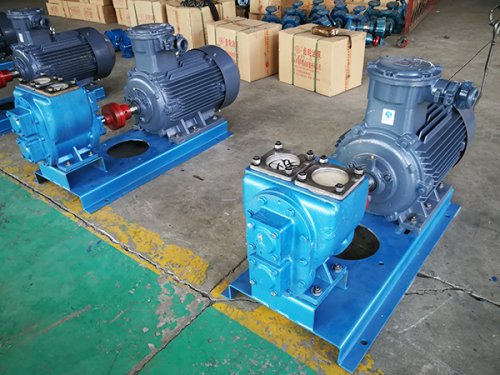
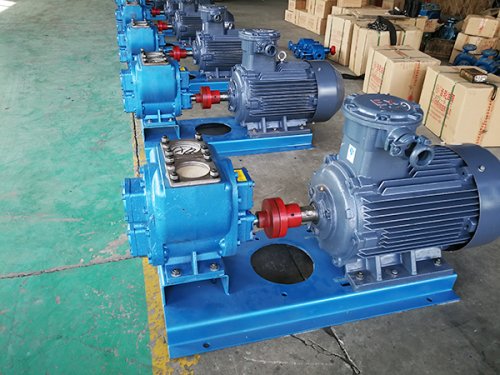
The asphalt insulation pump is mainly composed of pump body, insulation interlayer, gears, bearings, shaft end sealing device, front and rear covers, brackets, couplings, and electric motors.
Pump body: The pump body is the main part of the asphalt insulation pump, used to accommodate gears and media. The pump body is usually made of cast carbon structural steel, which has high temperature performance and strength.
Insulation layer: The insulation layer is located inside the pump body and is used to heat and insulate the asphalt medium. The insulation layer is usually made of materials that can withstand high temperatures, such as rock wool, aluminum silicate fibers, etc., to maintain the appropriate temperature of the medium during transportation.
Gear: Gear is the core component of asphalt insulation pump, used to convert mechanical energy into pressure energy and kinetic energy of liquid. Gears are usually made of carbon structural steel and undergo heat treatment to enhance their strength and wear resistance.
Bearings: Bearings are used to support the rotational motion of gears and shafts, reducing friction and wear. Bearings are usually composed of rolling bearings or sliding bearings, depending on the working conditions and requirements of the pump.
Shaft end sealing device: The shaft end sealing device is used to prevent medium leakage and maintain cleanliness inside the pump. There are two common forms of shaft end sealing: mechanical sealing and packing sealing. Mechanical seals have the advantages of good sealing performance and long service life, while packing seals have the advantages of simple structure and easy maintenance.
Front and rear covers: The front and rear covers are used to seal the two ends of the pump body, prevent medium leakage, and maintain pressure inside the pump. The front and rear covers are usually made of cast carbon structural steel and connected to the pump body through bolts.
Bracket: The bracket is used to support the pump body and motor, determining the stability and stability of the pump during operation. The bracket is usually made of cast iron or steel plate, with corresponding strength and stiffness.
Couplings: Couplings are used to connect electric motors and pump shafts, transmitting torque and rotational motion. Couplings are usually composed of elastic or metal components, which have corresponding buffering and shock-absorbing effects.
Electric motor: The electric motor is the power source of the asphalt insulation pump, used to drive the rotation of gears and shafts. The selection of electric motors should be determined based on the working conditions and requirements of the pump, including parameters such as power, speed, voltage, etc.
2、 The manufacturing process of asphalt insulation pump
The manufacturing process of asphalt insulation pump mainly includes steps such as casting, heat treatment, mechanical processing, assembly, and commissioning.
Casting: The pump body, front and rear covers, and other components are usually cast using casting methods. Strict control of casting temperature and casting speed is required during the casting process to ensure the quality and performance of the castings.
Heat treatment: Key components such as gears and bearings need to undergo heat treatment to enhance their strength and performance. The heat treatment process includes heating, insulation, and cooling steps, and the specific parameters should be determined according to the type and requirements of the material.
Mechanical processing: The cast parts need to be machined to meet the requirements. Mechanical processing includes processes such as turning, milling, and grinding to determine the dimensional accuracy and surface quality of components.
Assembly: Assemble the processed components, including the installation of gears, bearings, and shaft end sealing devices. Strict control of assembly clearance and assembly accuracy is required during the assembly process to ensure the performance and stability of the pump.
Debugging: After assembly, it is necessary to debug the asphalt insulation pump. During the debugging process, it is necessary to check the operation, sealing performance, pressure fluctuations, and other parameters of the pump to ensure that it meets the requirements and usage requirements.
In summary, the composition and manufacturing process of asphalt insulation pumps have a significant impact on their performance and service life. By using the correct manufacturing process, asphalt insulation pumps can operate stably in high-temperature and high viscosity media, meeting engineering requirements.